Thonet Boppard Chair
Before Vienna, before No. 14—there was the Boppard chair: the design that turned wood-bending from experiment into technique.
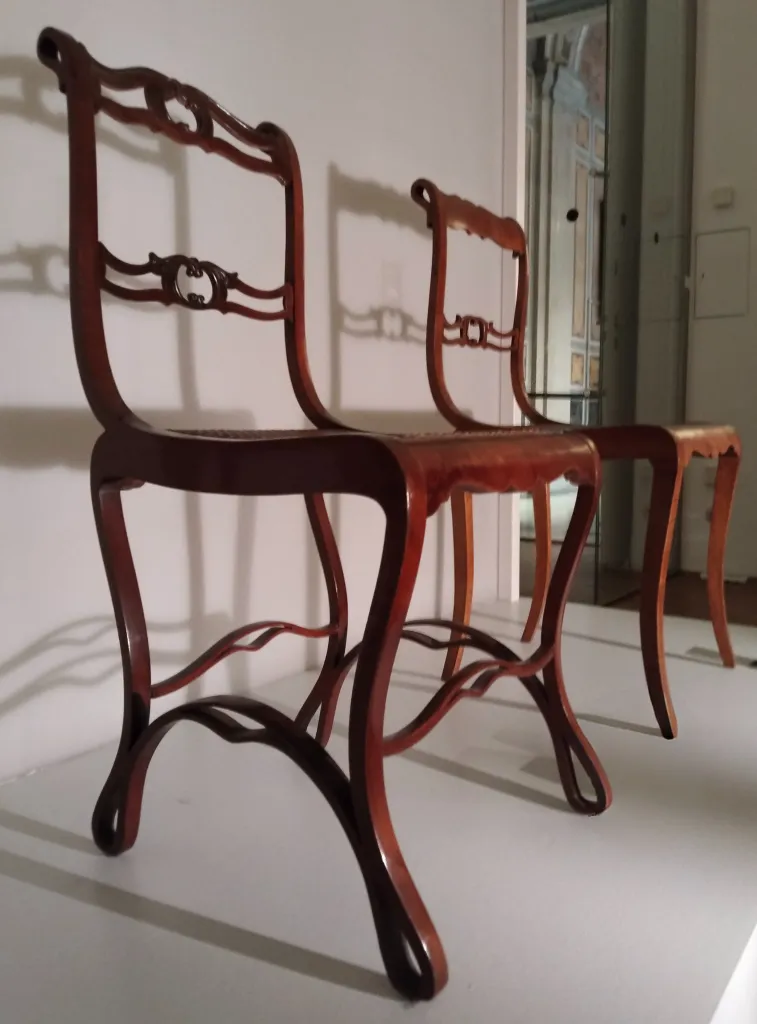
Source: by Stable MARK - own work.
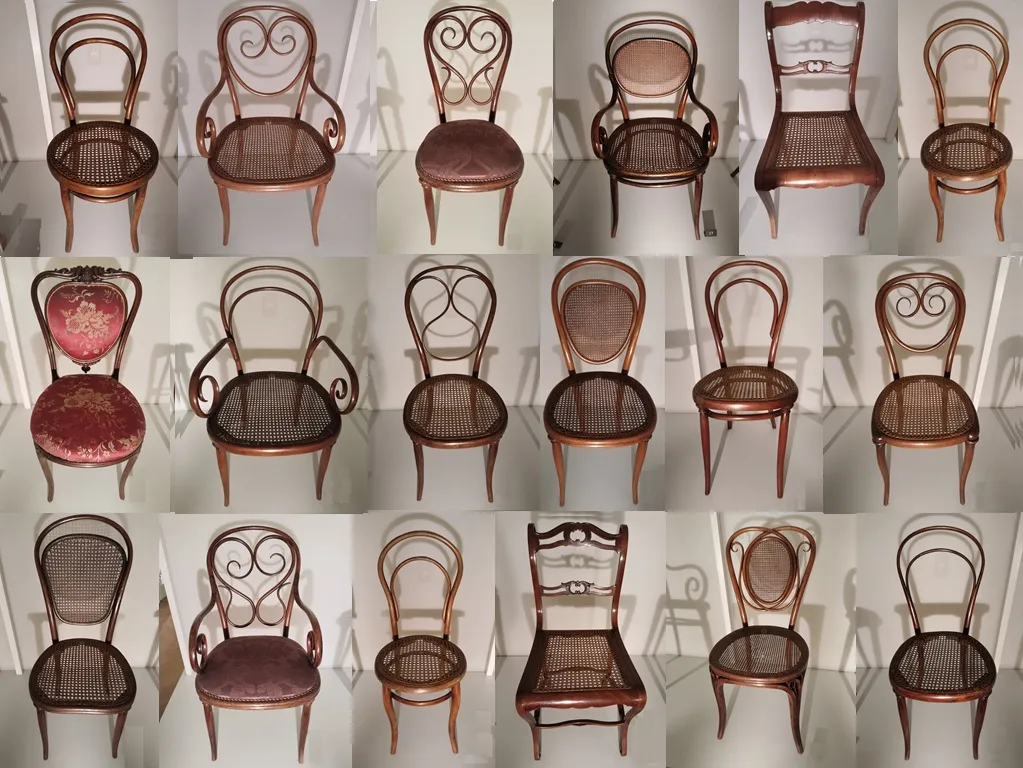
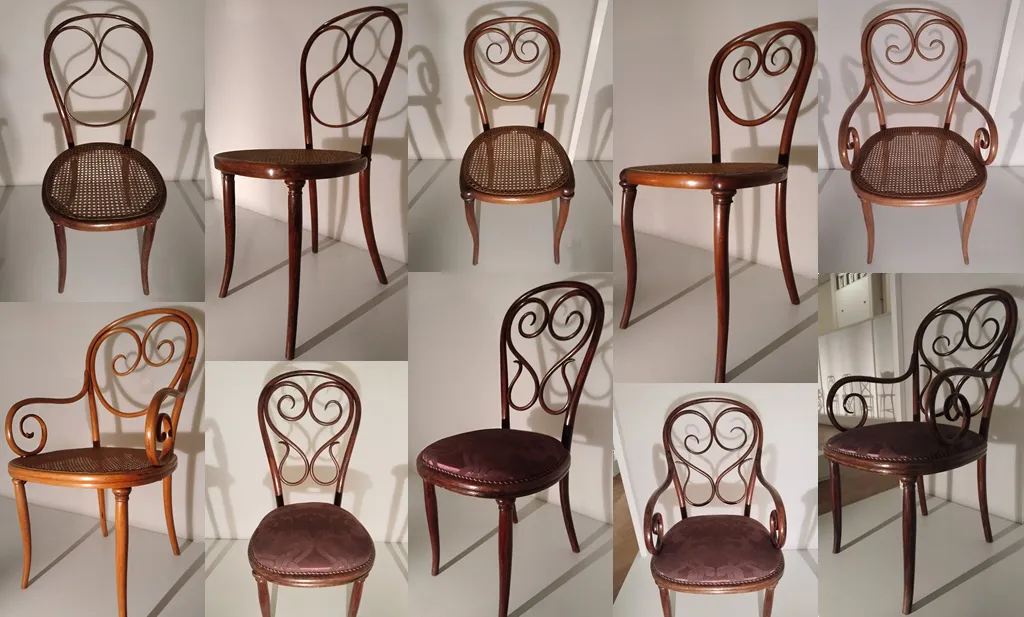
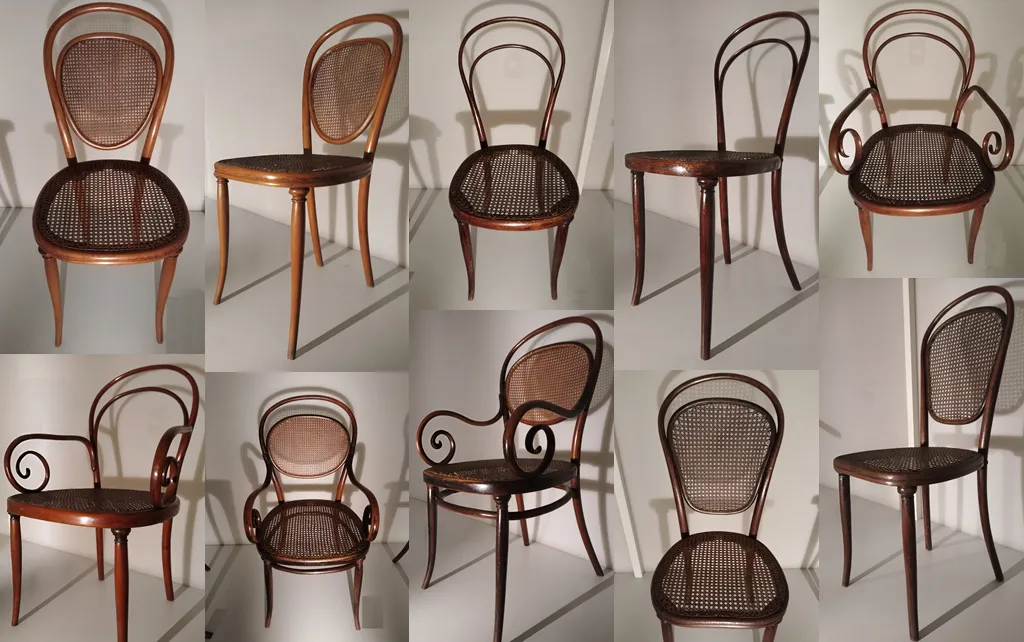
This article outlines the origins, construction, and design features of the Boppard chair, with images showing key variations from Thonet’s early production.
Table of Contents
Origins and ContextConstruction and MaterialsForm and DimensionsProcess History and VariantsOrigins and Context
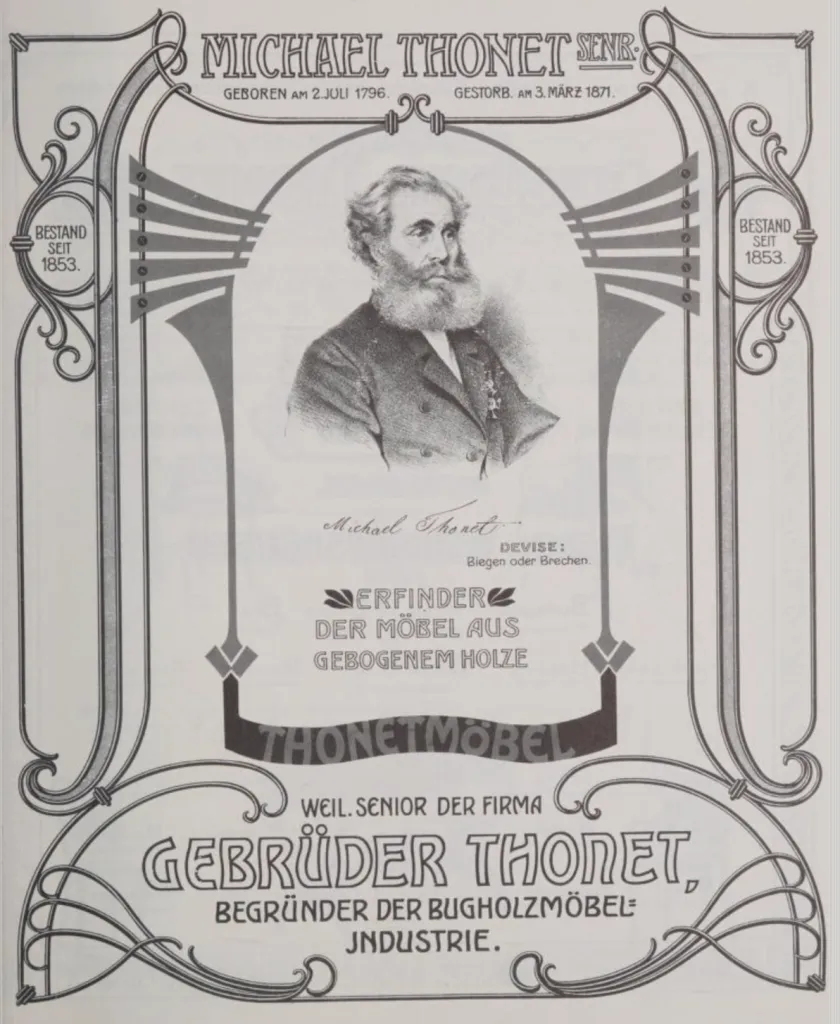
Developed by Michael Thonet in Boppard am Rhein c. 1836–1840, just before the 1842 move to Vienna, this so called "boppard chair" is the proving ground for later bentwood production. It shows how laminated, mould-bent frames could produce light, resilient seating fit for serial manufacture and points directly to later solid-beech steam-bent models such as No. 1 and No. 14.
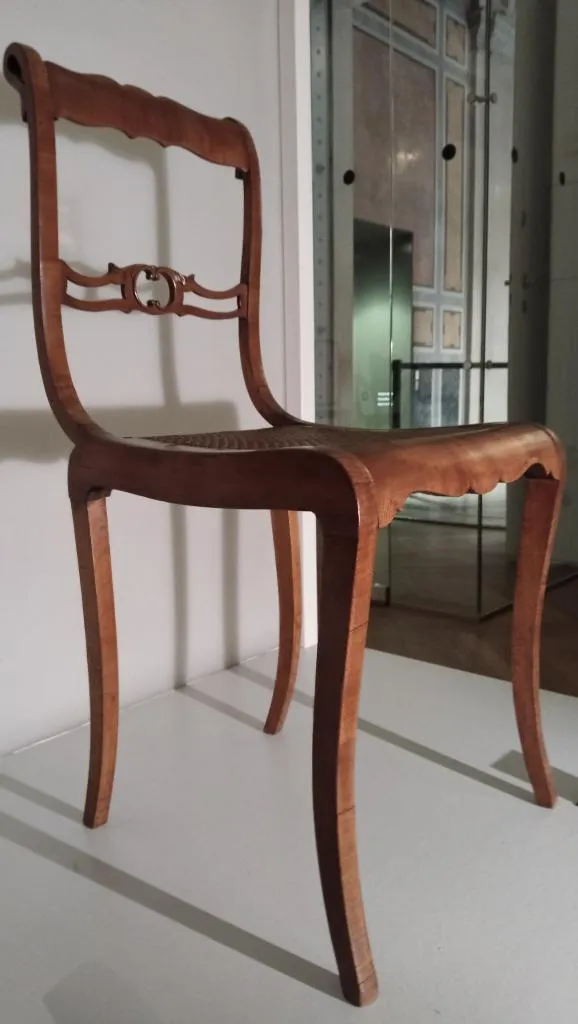
Source: by Stable MARK - own work.
Learn More Still curious about bentwood furniture? Click here to see Thonet rocking chair.
Construction and Materials
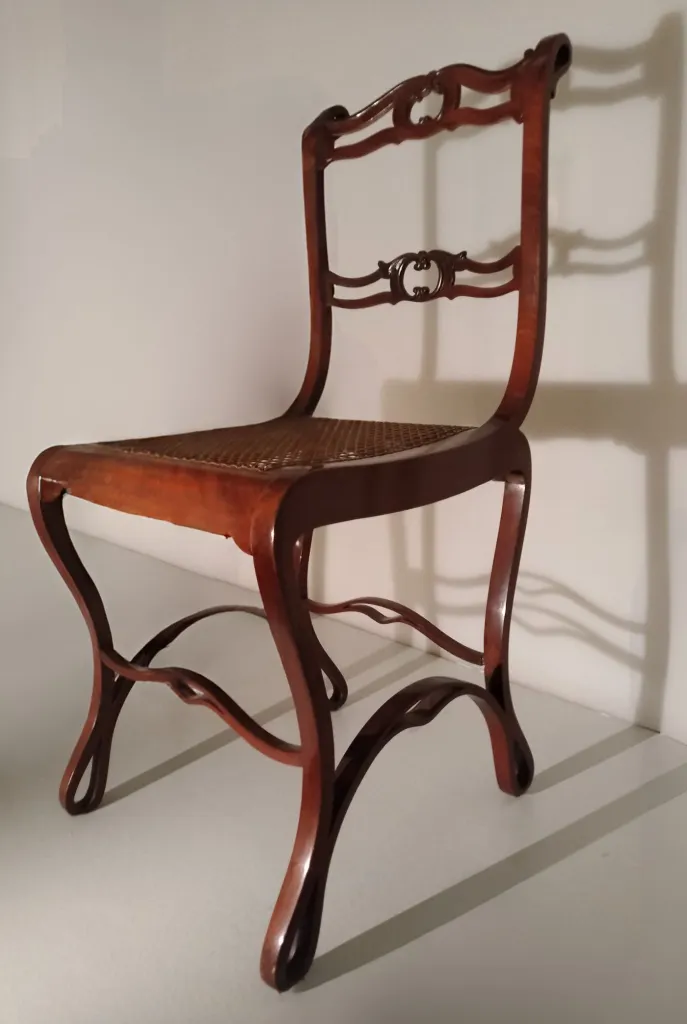
Construction uses narrow beech veneers boiled in glue, laminated into bundles, bent in heated moulds, and then veneered—typically walnut or mahogany, with rosewood on some runs. Side frames are commonly built from about five layers with varied thickness for load paths. Turned elements appear in rails and stretchers. Seats occur in rattan cane or upholstery.
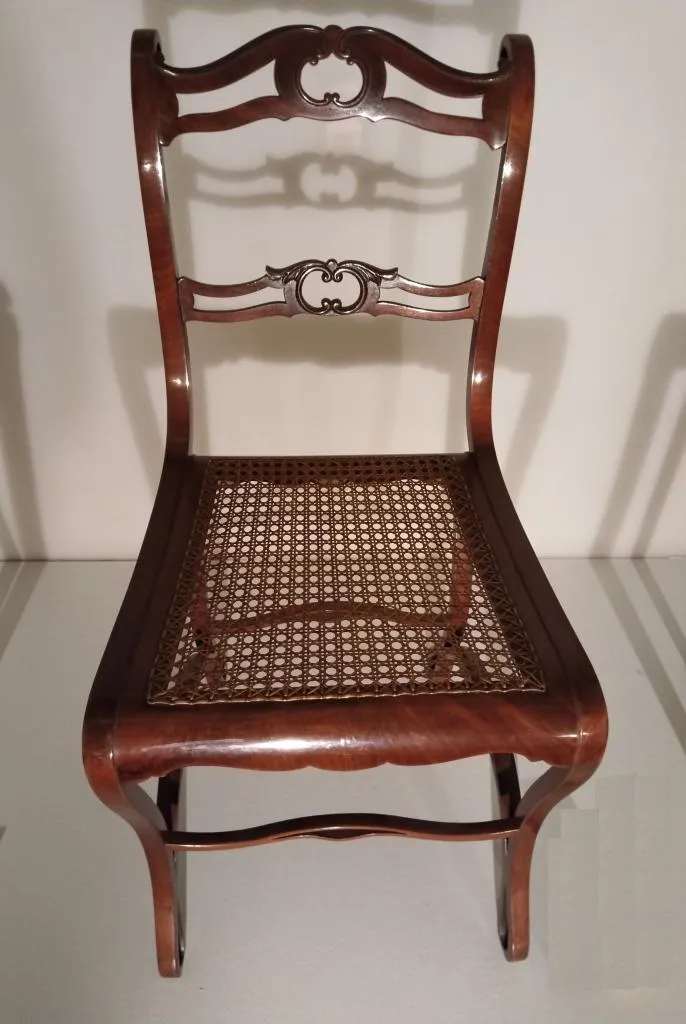
Source: by Stable MARK - own work.
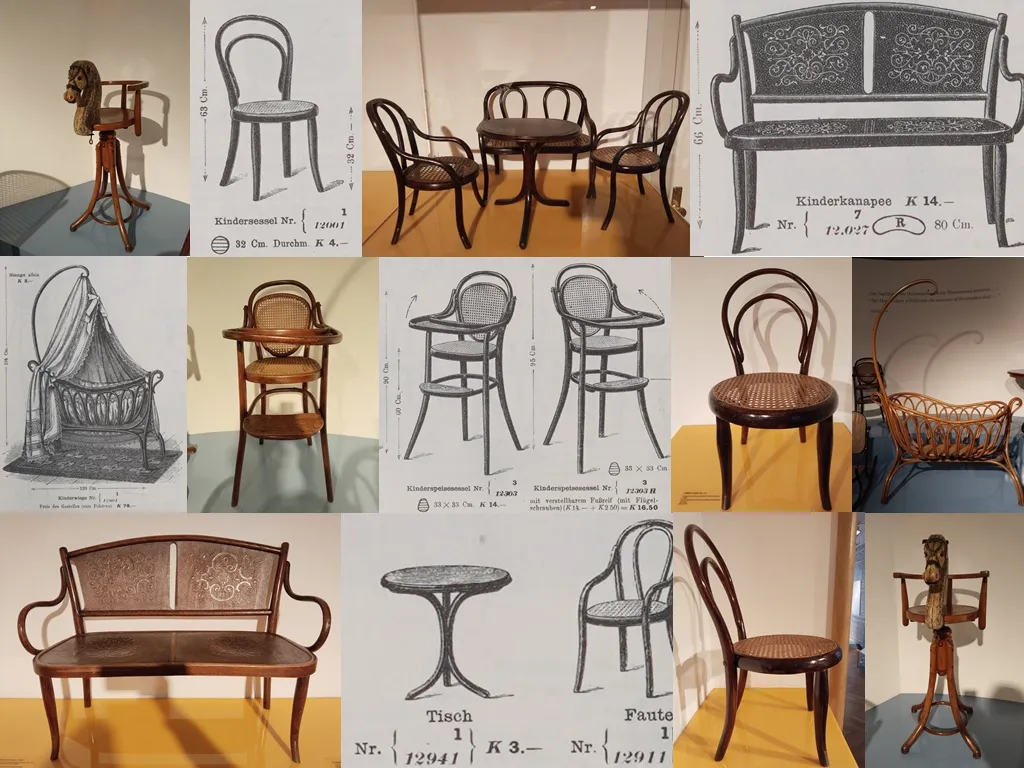
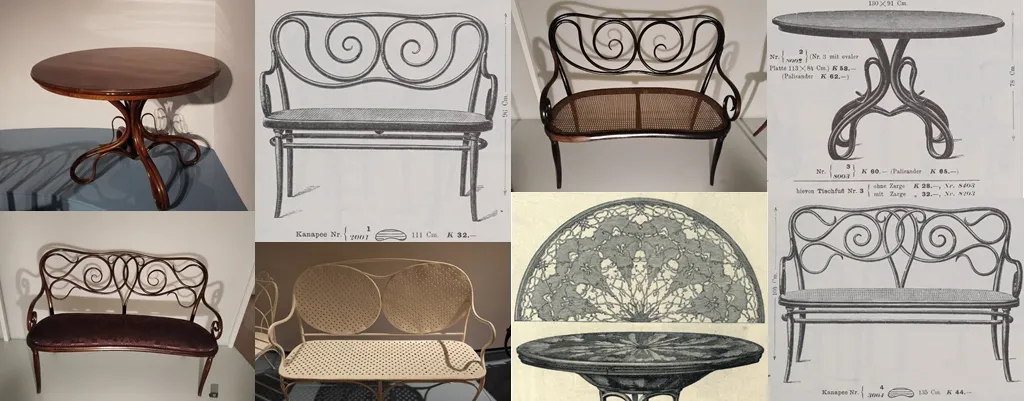
Learn More Still curious about bentwood furniture? Click here to see Thonet Settee and Table or here to see Thonet Children and Doll Furniture.
Form and Dimensions
The form is defined by continuous S-curved side frames, a seat frame tied into those curves, looped laminated braces beneath the seat, and a thin back rail set into the bend. A representative museum example measures roughly H 85.5 × W 42.5 × D 50 cm; workshop variants differ slightly.
Source: by Stable MARK - own work.
Learn More Still curious about bentwood furniture? Click here to see Thonet Chair and Armchair Model No. 1, 2 & 4 or here to see Thonet Chair and Armchair Model No. 7, 8, 11 & 12.
Process History and Variants
In process history, the chair precedes Thonet’s Austrian privilege of 16 July 1842 for chemical-mechanical wood bending and belongs to the glued-laminate phase that led to mid-1850s steam-bending of solid beech. Documented early “Boppard” patterns include at least two types (e.g., a “Model II” c. 1840/42) with laminated frames and walnut or rosewood face veneers.

Source: by Stable MARK - own work.
Learn More Still curious? Click here to learn how to tell if a thonet chair is real.
Share this article