S. J. Addis Carving Tools
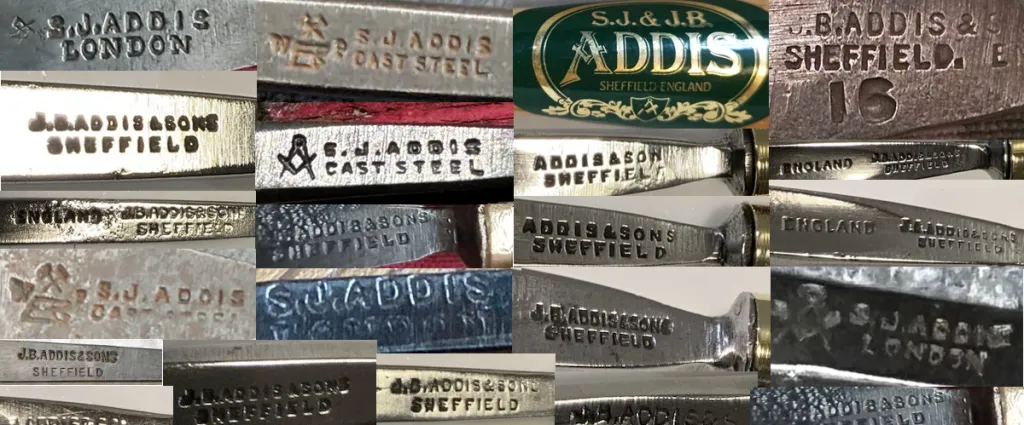
For a woodcarver in the 1900s, the name S. J. Addis represented the pinnacle of edge-tool quality.
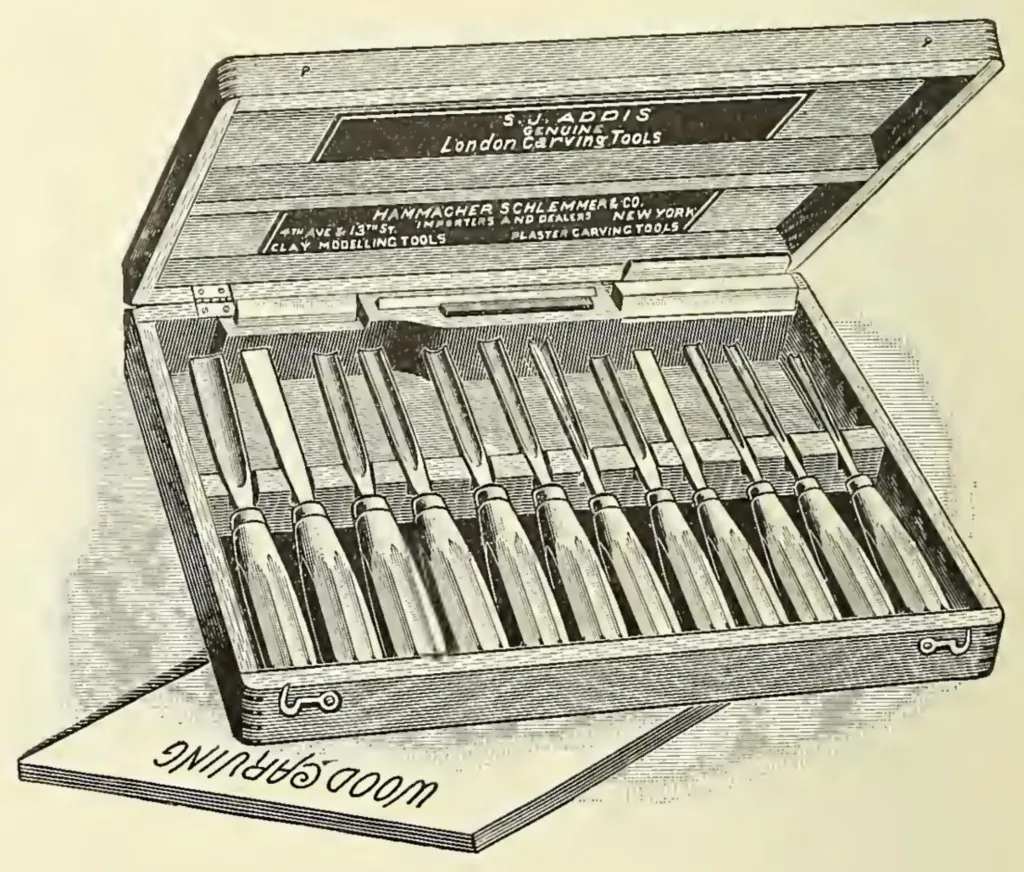
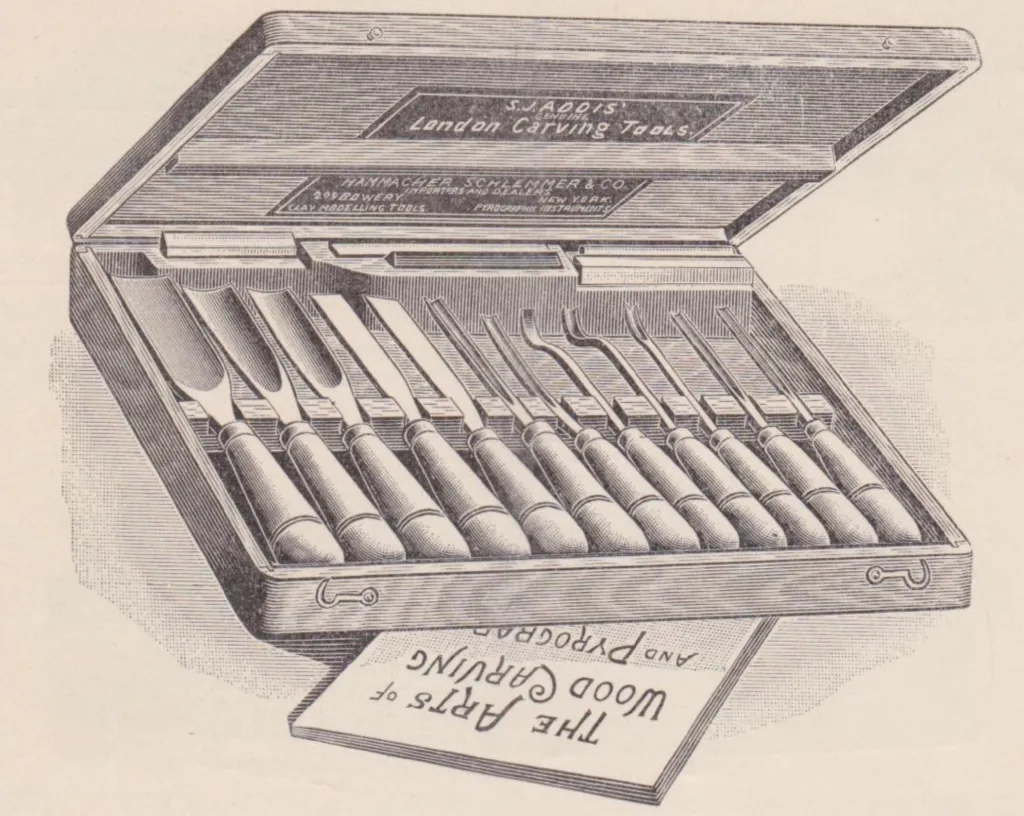
Source: Hammacher Schlemmer & Co. Catalogue No. 500, Page 458, published 1900. The image corresponds to Set No. 12 (or Set No. 11, depending on the handle style) of Carving Tools. Internet Archive - public domain.
The Addis name carried a pedigree dating back to the early 19th century. By 1961 these tools were prized for their "All Bright Finish" and high-carbon steel that held a razor edge far longer than mass-produced modern alternatives.
Table of Contents
The Gold Standard of Sheffield Steel: S. J. Addis Woodcarving ToolsCurved and Spoon Bit "V" Parting ToolsStraight "V" Parting ToolsSpecialized Profiles: Macaroni, Fluteroni, and Veining ToolsLadies' All Bright Woodcarving ToolsThe Gold Standard of Sheffield Steel: S. J. Addis Woodcarving Tools
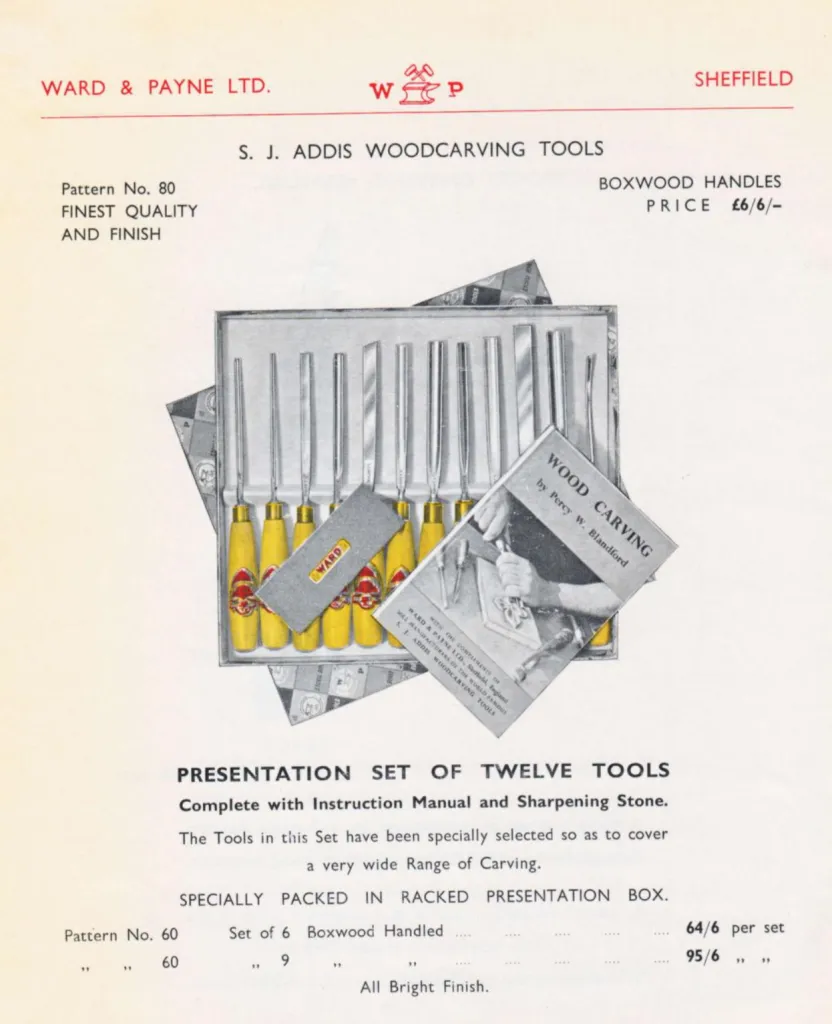
Source: Catalogue of S. J. Addis Wood Carving Tools: Revised 1961 Edition by Ward & Payne Ltd. Internet Archive - public domain.
The Anatomy of the Presentation Set
The set featured in this advertisement (Pattern No. 80) was designed as a comprehensive "shop in a box." It included:
- Twelve Specialized Tools: Ranging from straight chisels to deep gouges and V-tools (parting tools).
- Boxwood Handles: Unlike cheaper ash or beech, boxwood is incredibly dense and smooth, resisting splitting and providing a comfortable, balanced grip for delicate detail work.
- The Extras: A dedicated sharpening stone and an instruction manual by Percy W. Blandford, a prolific writer on woodcraft who helped popularize the hobby in the post-war era.
In 1961, the price of £6/6/- (six pounds and six shillings) was a significant investment, roughly equivalent to a week's wages for a skilled tradesman at the time. Today, these vintage sets are highly sought after by collectors and traditional green-woodworkers. Unlike modern tools, these were forged during an era where Sheffield's heat-treatment processes were at their absolute zenith.

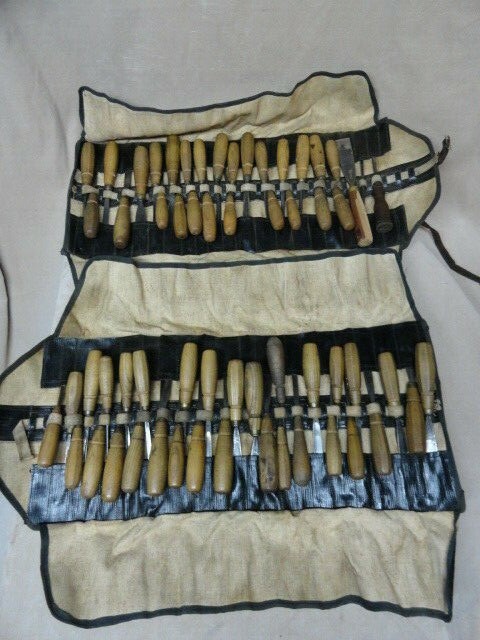
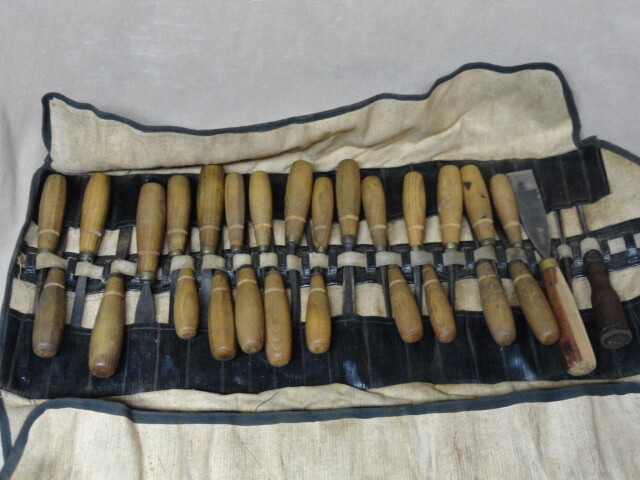
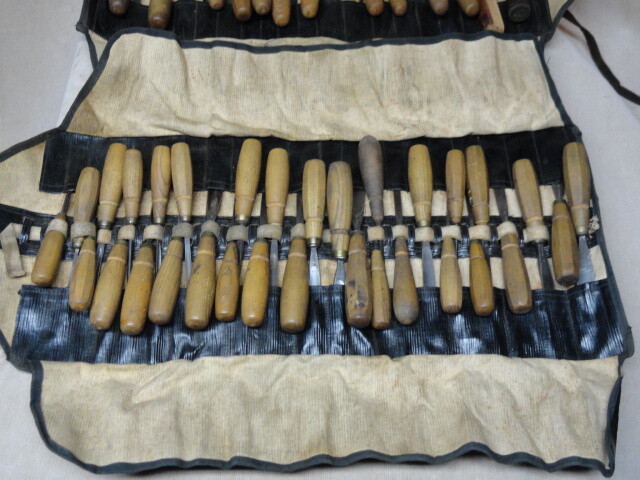
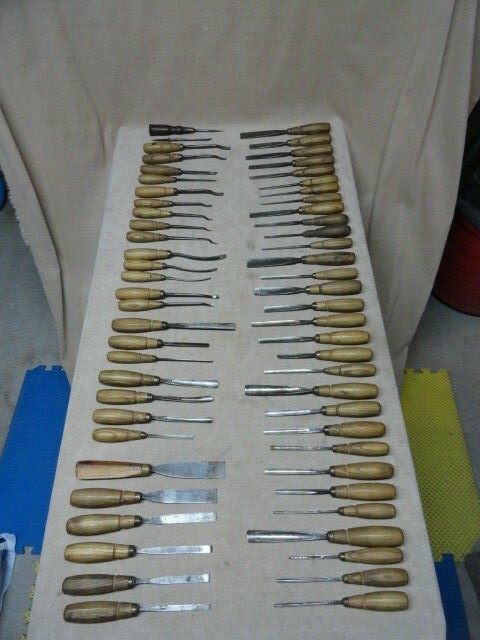

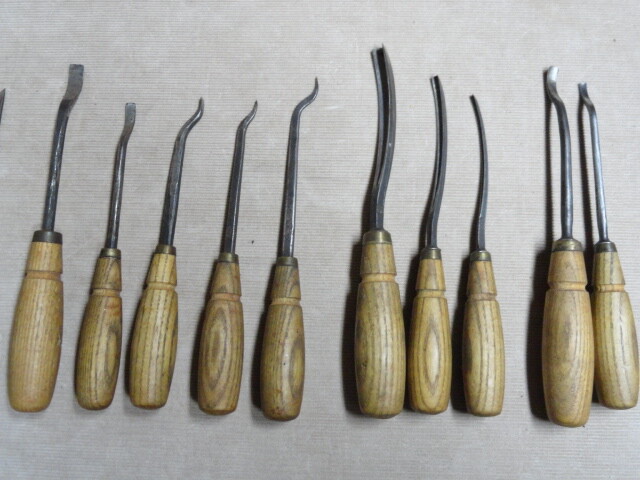
Carving Chisel Set Mostly Addis w/ Cleff Taylor Buck Vintage 60 pc w/ Cases
(5907) 100.00% positive
Curved and Spoon Bit "V" Parting Tools
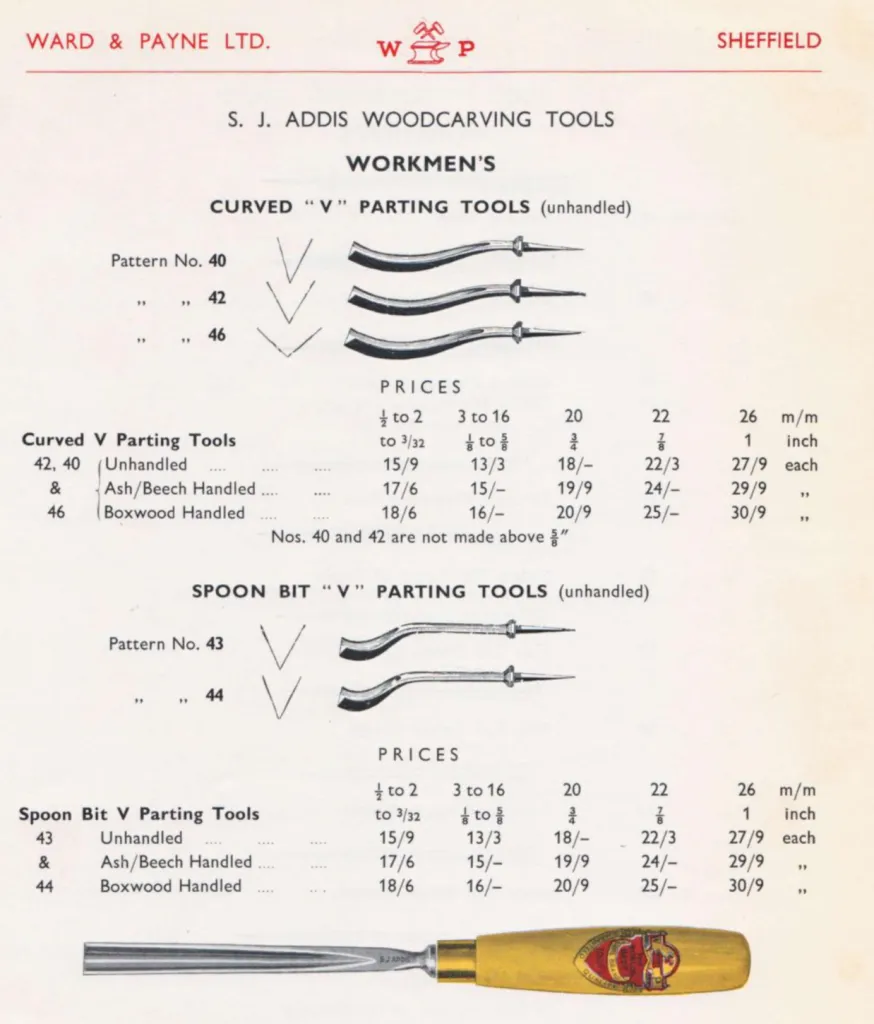
Source: Catalogue of S. J. Addis Wood Carving Tools : Revised 1961 Edition by Ward & Payne Ltd. Internet Archive - public domain.
While a straight chisel is the workhorse of the shop, the specialized Curved and Spoon Bit parting tools shown here were essential for navigating the complex contours of decorative carving. These tools allowed the craftsman to maintain a consistent groove depth even when working in recessed areas where a straight tool handle would strike the workpiece.
Understanding the Patterns
The catalogue lists several distinct patterns, each serving a specific mechanical purpose:
- Curved "V" Parting Tools (Patterns 40, 42, 46): These feature a long, sweeping curve along the blade, allowing for better clearance in hollows.
- Spoon Bit "V" Parting Tools (Patterns 43, 44): These possess a more abrupt "spoon" bend near the tip, ideal for quick, deep cuts in tight spots.
- Angle Variations: The diagrams illustrate different internal angles for the "V" shape, ranging from narrow to wide, to accommodate various decorative styles.


Vintage J.B. Addis & Sons Sheffield England Carving V-tool 10 Prize Medals
(original price: 30.00 GBP)
(1250) 99.80% positive
Learn More Still curious? Click here to see more S. J. Addis Wood Carving Gouges.
Straight "V" Parting Tools
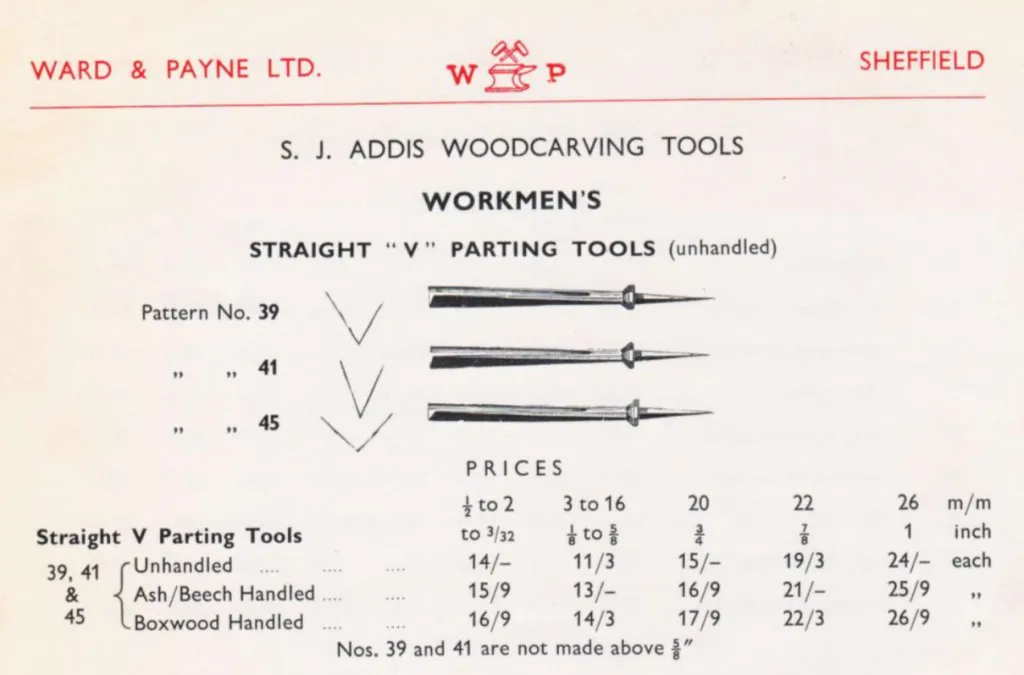
Source: Catalogue of S. J. Addis Wood Carving Tools : Revised 1961 Edition by Ward & Payne Ltd. Internet Archive.
In the world of professional woodcarving, the "V" parting tool—often referred to as a "Geißfuß" in the German tradition—is indispensable for defining borders and cutting deep grooves. The 1961 S. J. Addis range offered three distinct mechanical geometries to handle every possible carving scenario.
The Straight "V" (Patterns 39, 41, 45) is the standard tool for flat surface work. These were offered in various angles, from narrow to wide, to control the aesthetic of the cut. A notable production detail is that patterns 39 and 41 were specifically restricted to sizes of 5/8 inch or smaller.
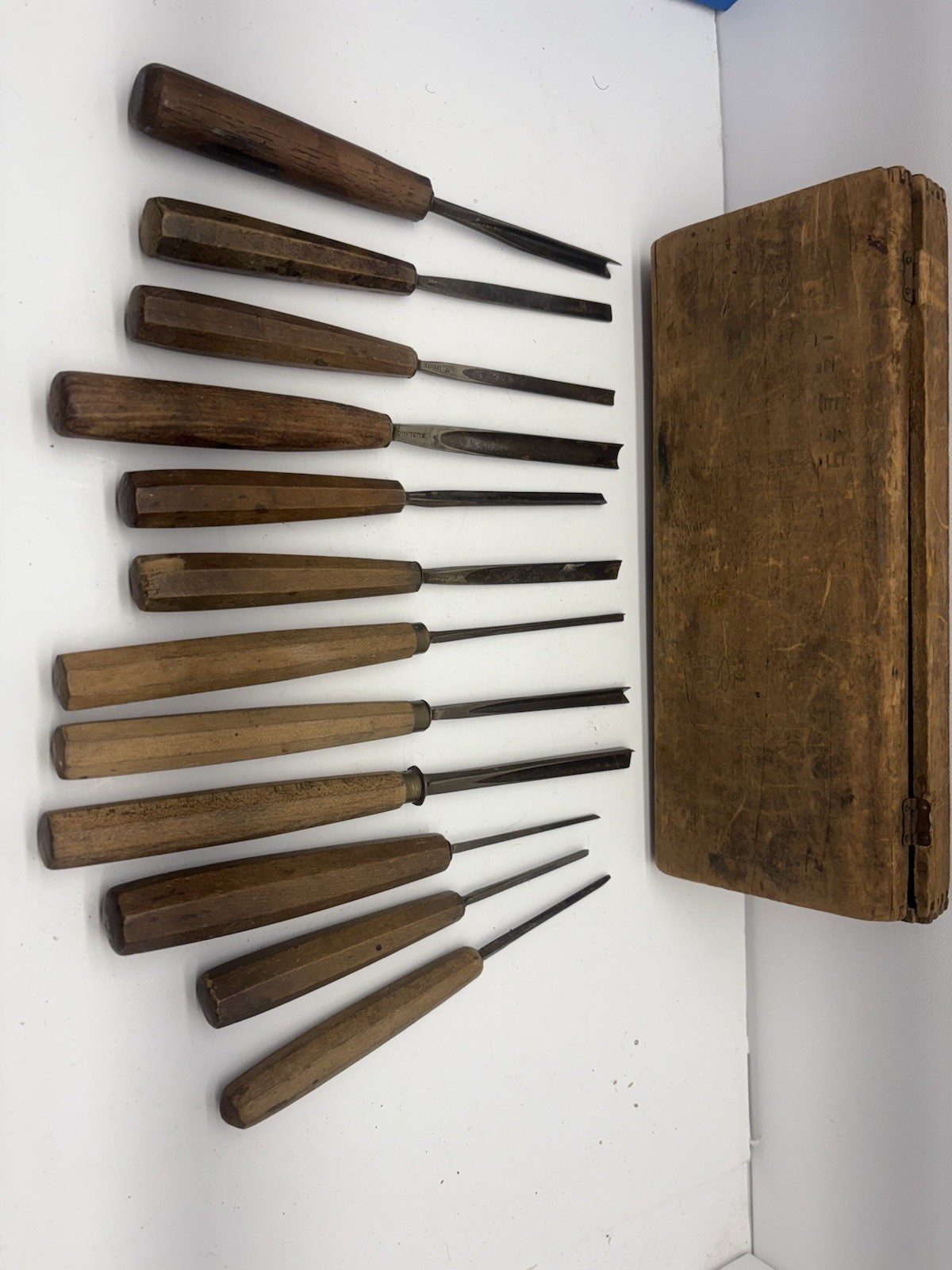


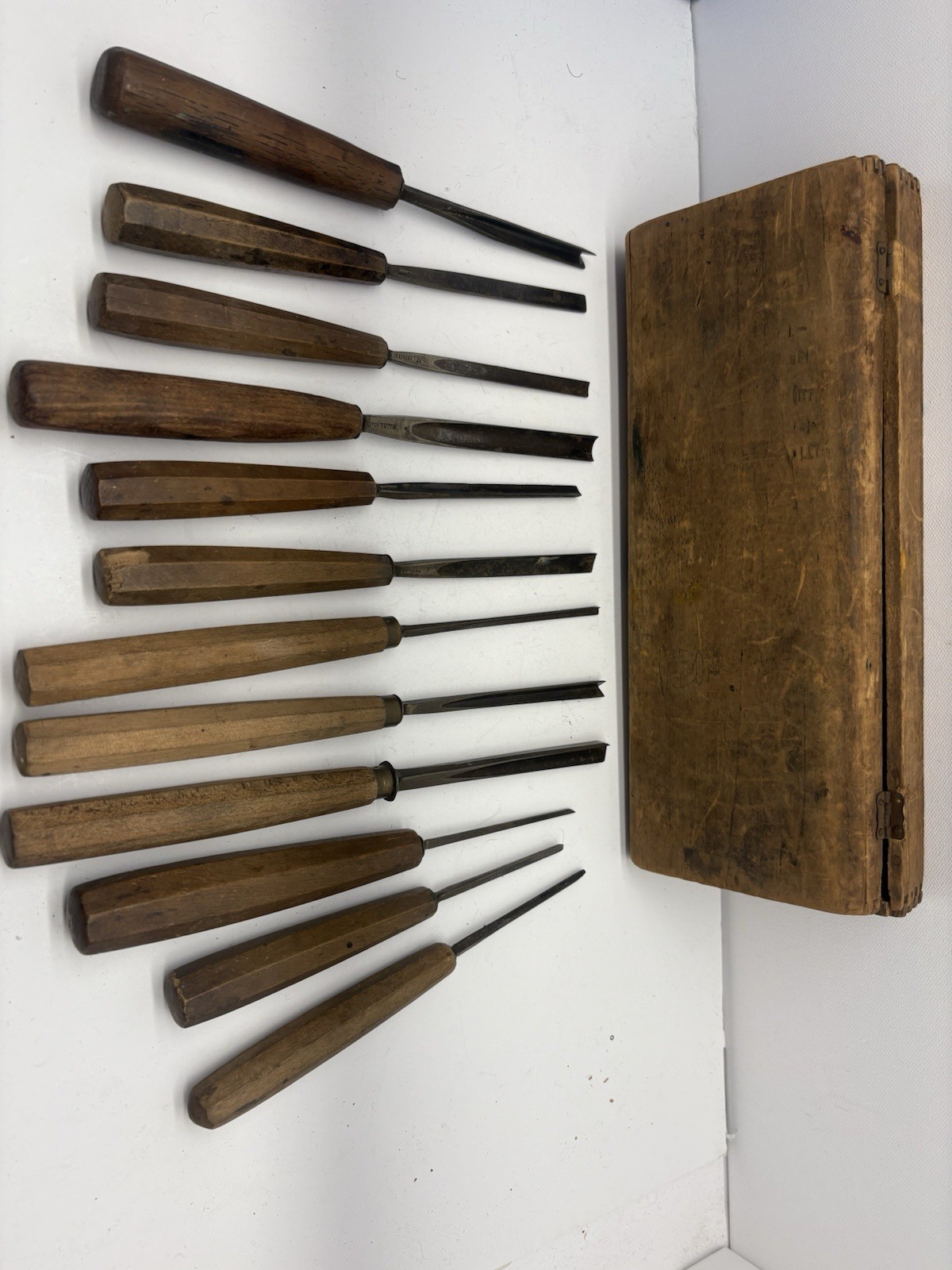
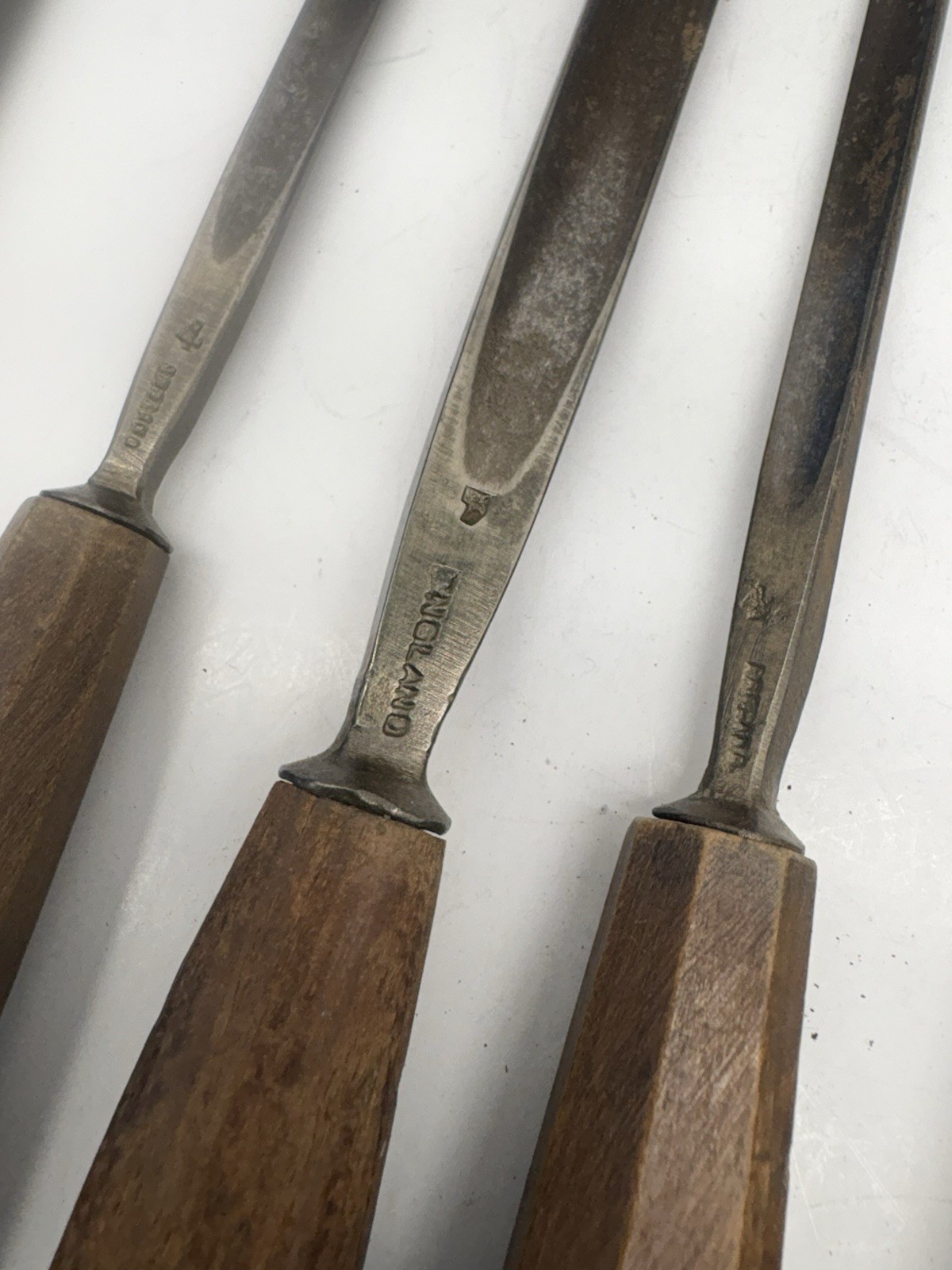

Antique Cast Metal Wood Carving Chisels SJ Addis (7) Herring(3) Henc(1) Italy(1)
(2759) 100.00% positive
Learn More Still curious? Click here to see more S. J. Addis Wood Carving Chisels.
Specialized Profiles: Macaroni, Fluteroni, and Veining Tools
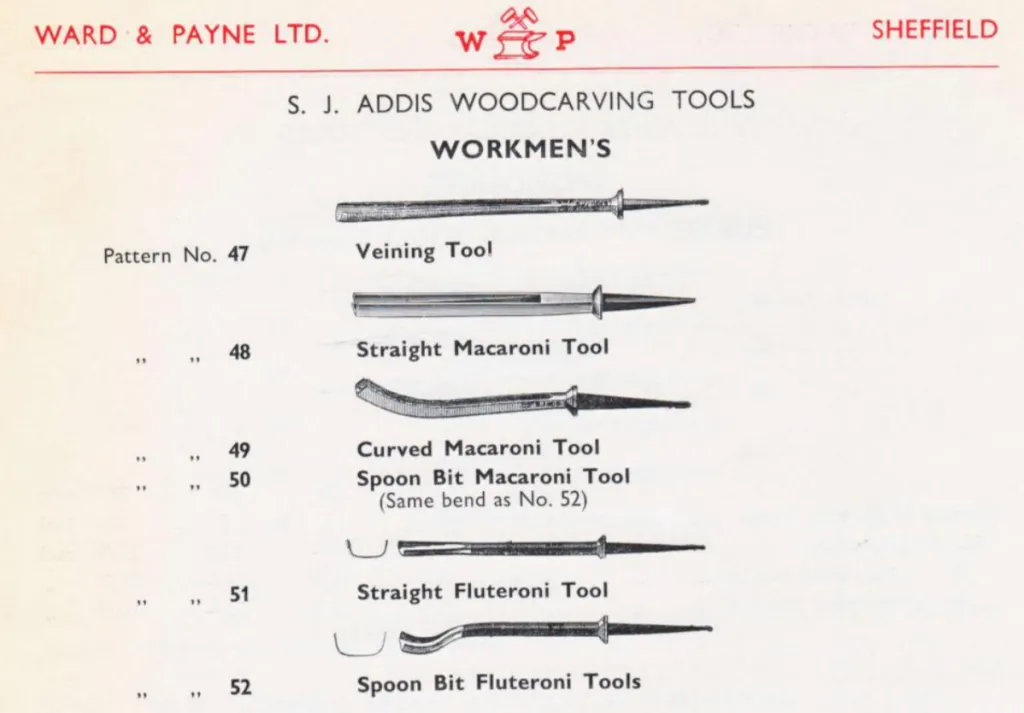
Source: Catalogue of S. J. Addis Wood Carving Tools : Revised 1961 Edition by Ward & Payne Ltd. Internet Archive
The "V" parting tool, frequently called a "Geißfuß" (goat’s foot) in German-speaking regions, is the carver's primary instrument for defining borders and creating sharp, linear shadow lines.
- Pattern No. 47 (Veining Tool): A fine, delicate tool used for cutting hair-thin lines, such as the veins in carved leaves or decorative linework.
- Macaroni Tools (Patterns 48, 49, 50): These feature a flat bottom with vertical side walls, creating a square-cornered channel. They are provided in straight, curved, and spoon bit variations to reach different depths of a carving.
- Fluteroni Tools (Patterns 51, 52): Similar to the Macaroni, but with a rounded "U" shape at the bottom while maintaining vertical sides. These are shown in both straight and spoon bit geometries.


Vintage Antique S.J. Addis London Wood Carving Tools Chisel Gouge Set 14 Pc
(3567) 100.00% positive
Ladies' All Bright Woodcarving Tools
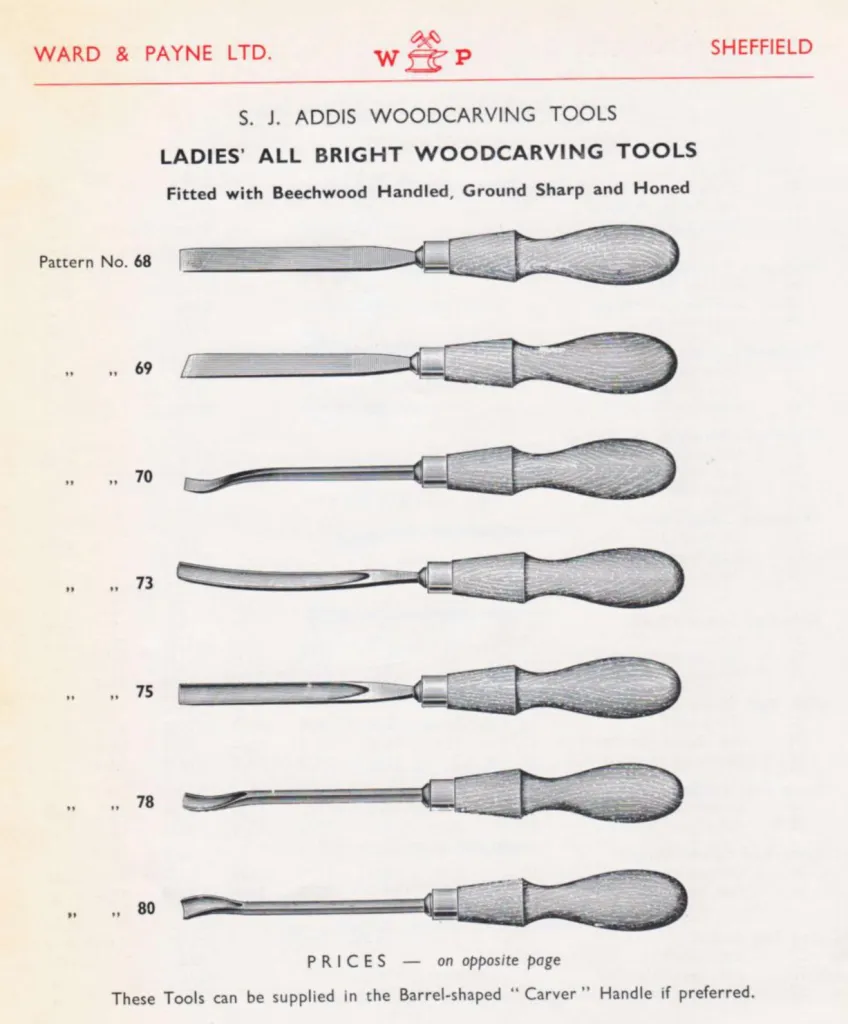
Source: A 1961 catalogue page from Ward and Payne Ltd showcasing S. J. Addis Ladies' All Bright Woodcarving Tools, featuring seven different patterns with beechwood handles. Internet Archive
Whether you are a dedicated collector or a practicing artisan, the 1961 S. J. Addis catalogue remains a testament to the golden age of Sheffield steel. These tools represent a unique marriage of Victorian pedigree and mid-century industrial precision, offering a level of craftsmanship that continues to set the standard for woodcarvers worldwide.
Carving Chisel Set Mostly Addis w/ Cleff Taylor Buck Vintage 60 pc w/ Cases
(5907) 100.00% positive
Share this article