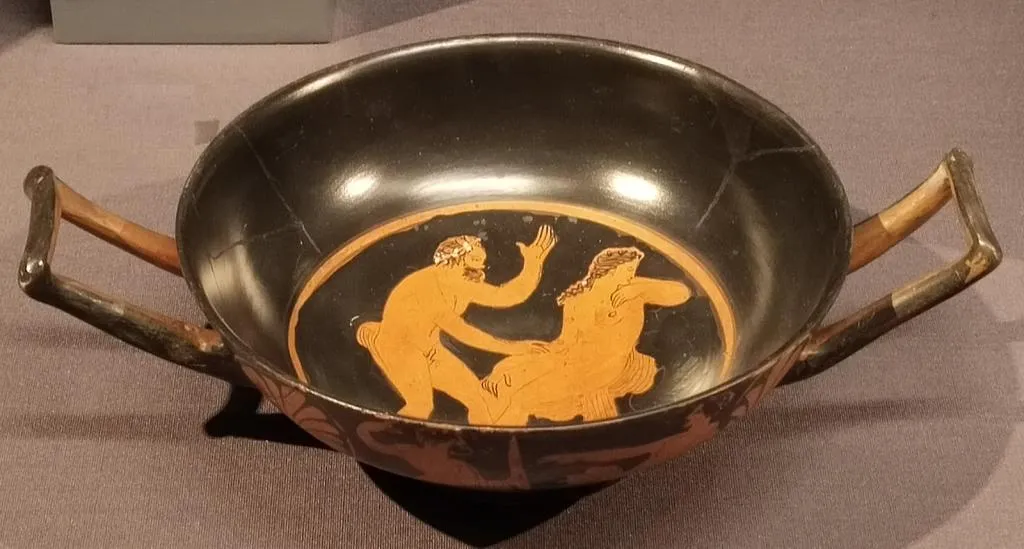
Ancient Greek Silver AR Stater Coins
From Athena and Apollo to Baaltars and Zeus, these ancient Greek staters reveal how cities and rulers turned silver into myth, identity, and authority.
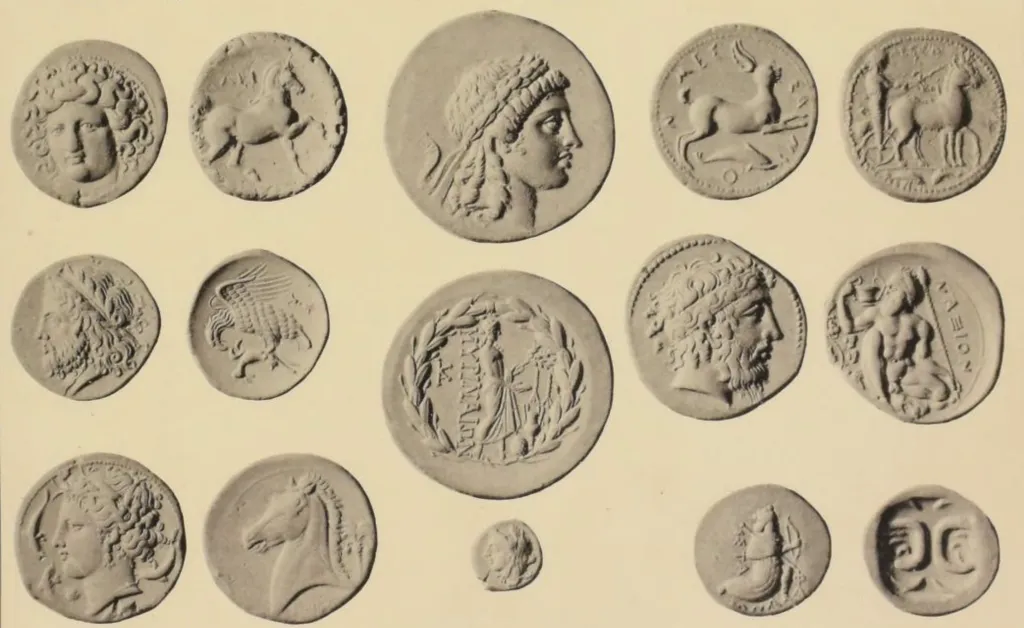
Source: Sotheby, Wilkinson & Hodge, The Important Collection of Coins and Medals of Wm. Rome, London, 24 February 1904. Internet Archive.
This article leads readers through a selected group of ancient Greek staters, explaining their imagery, inscriptions, regional styles, and historical background in clear, accessible language. It shows how civic identity, local cults, heroic myths, and satrapal power were expressed in silver coinage from Lucania and Thessaly to Cilicia and Bruttium.
Table of Contents
Kelenderis, Cilicia: Greek Silver AR Stater with Naked Horseman and Kneeling GoatHerakleia, Lucania: Greek Silver AR Stater with Athena and Herakles Wrestling the LionKroton, Bruttium: Greek Silver AR Stater with Apollo and Young Herakles Strangling SerpentsLarissa, Thessaly: Greek Silver AR Stater with Nymph Larissa and Prancing HorseLokroi, Bruttium: Greek Silver AR Stater with Zeus and Eagle on HareTarsos, Cilicia: Greek Silver AR Stater with Baaltars and Lion Attacking BullVelia, Lucania: Greek Silver AR Stater with Athena and Lion Devouring StagKelenderis, Cilicia: Greek Silver AR Stater with Naked Horseman and Kneeling Goat
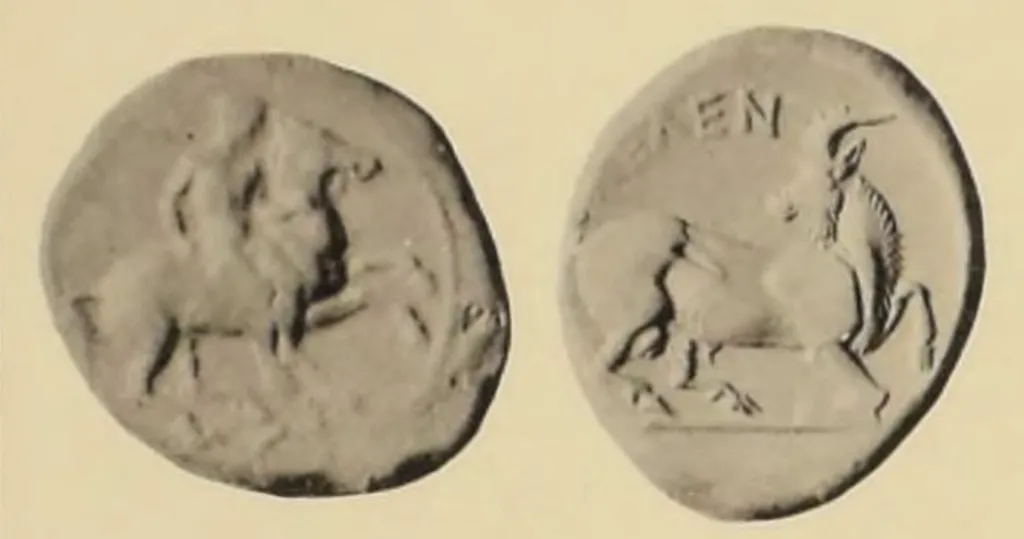
Source: Sotheby, Wilkinson & Hodge, The Important Collection of Coins and Medals of Wm. Rome, London, 24 February 1904. Internet Archive.
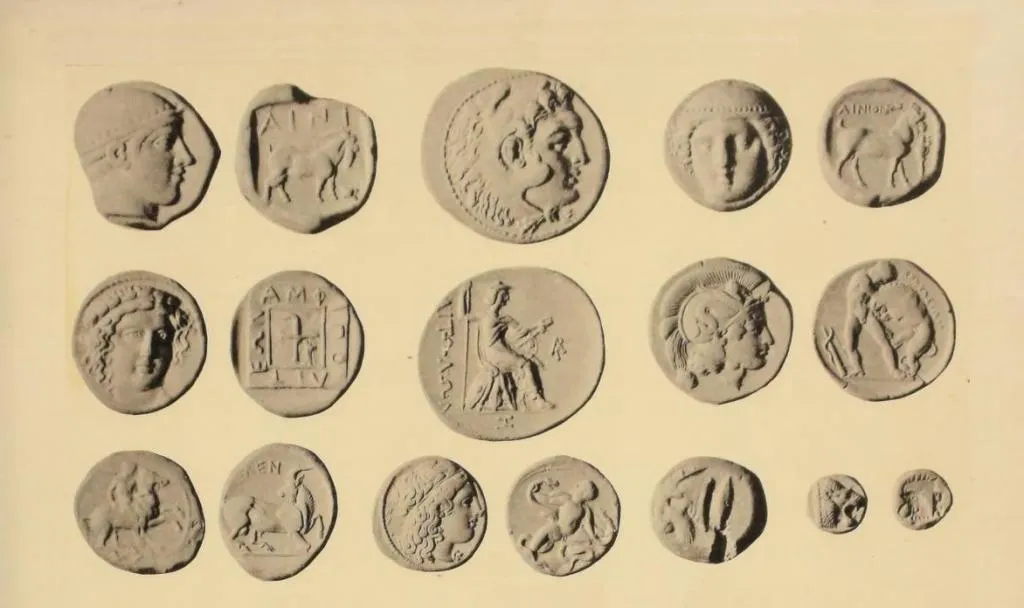
Kelenderis, Cilicia — AR stater. The obverse shows a naked horseman riding to the right, with a small field mark beneath, usually read as TA (?) or a similar letter group. The reverse carries a goat kneeling to the right on one knee. The inscription reads KEΛEN, an abbreviated ethnic referring to Kelenderis. This type is very fine in style and regarded as rare. In modern terms, this indicates a city-issued silver coin identified by the abbreviated name of the mint on the reverse.
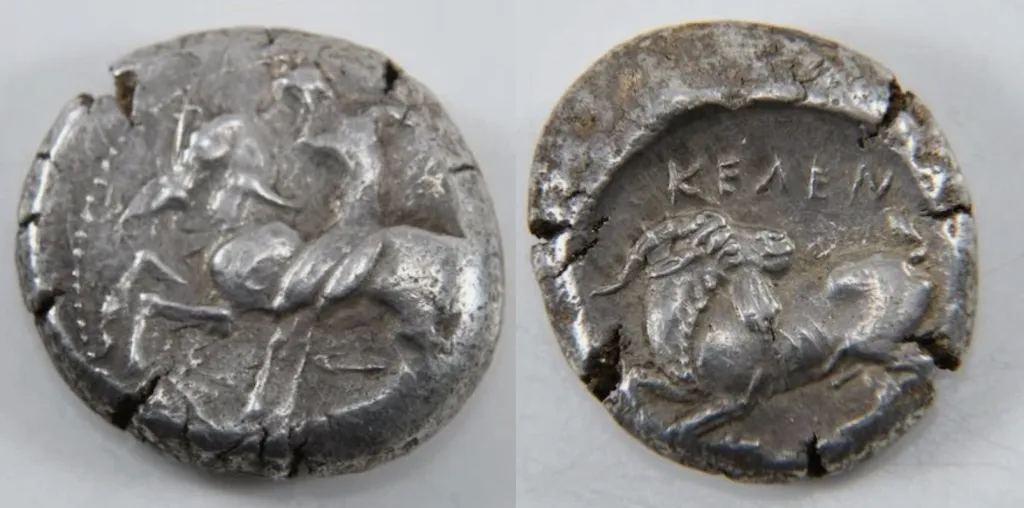
Source: by Stable MARK - own work.
- Year — Minted circa 425–400 BC.
- Diameter — Known examples of this type usually measure about 19–21.5 mm.
- Weight — Standard weight of this type: approx. 10.7 g / 0.38 oz.
How much is it worth?
A similar example in excellent antique condition was sold on eBay (USA) for $450 in Feb 2026.


Cilicia, Kelenderis, Silver Stater, c. 425-400 BC.
(original price: 1,801.00 GBP)
(105) 100.00% positive
Learn More Still curious? Click here to see Ancient Greek Silver Tetradrachm Coins.
Herakleia, Lucania: Greek Silver AR Stater with Athena and Herakles Wrestling the Lion
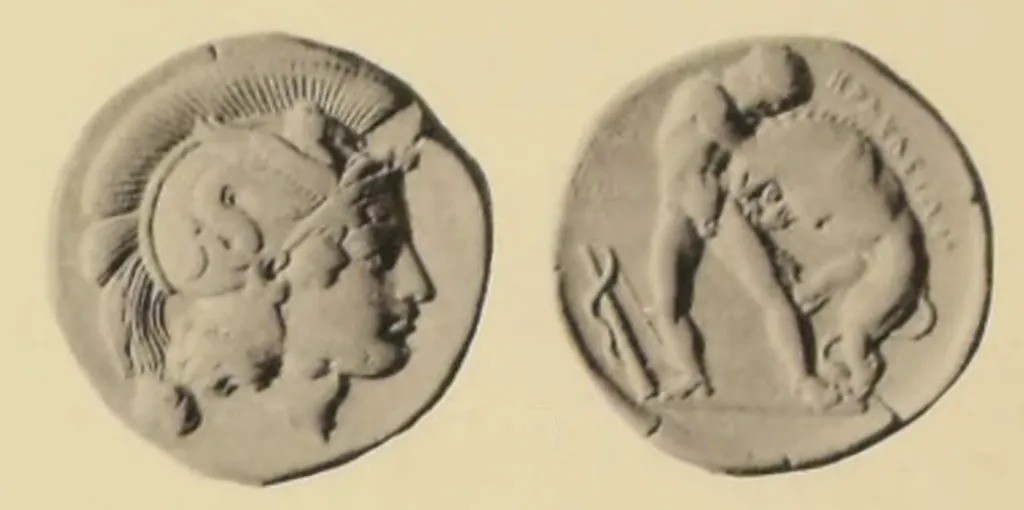
Source: Sotheby, Wilkinson & Hodge, The Important Collection of Coins and Medals of Wm. Rome, London, 24 February 1904. Internet Archive.
Herakleia, Lucania — AR stater. The obverse shows the head of Athena facing right, wearing a crested helmet with a seahorse on the side. The reverse carries Herakles wrestling the lion. The inscription reads HPAKLEIŌN, meaning “of the Herakleians” or “of Herakleia.” In the field appears a club and bow at left. This type is very rare and noted for its unusually fine style. In modern terms, this indicates a scarce and artistically accomplished civic silver issue struck in the name of the city rather than a king.
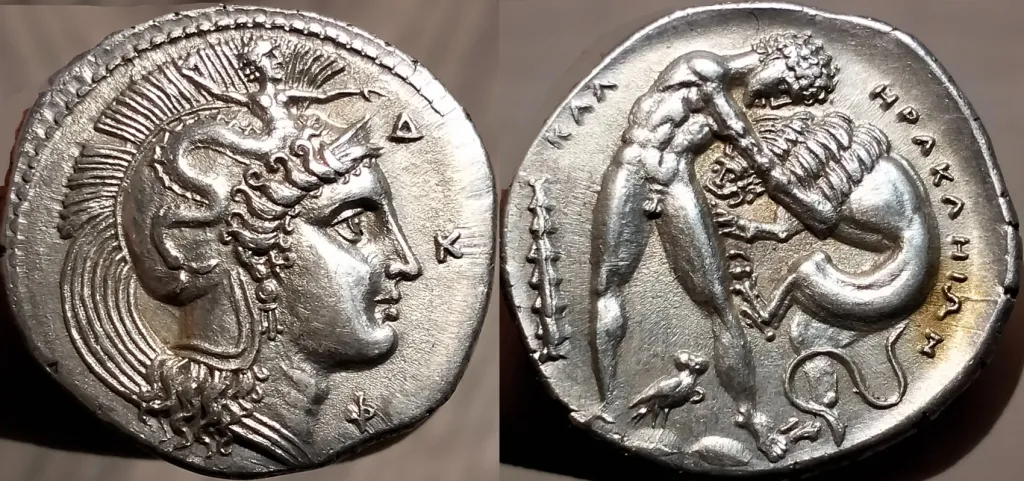
Source: by Stable MARK - own work.
- Year — Minted circa 471/470–469/468 BC.
- Diameter — Known examples of this type measure 23–25.6 mm.
- Weight — Standard weight of this type: approx. 15.89 g / 0.56 oz.
Learn More Still curious? Click here to see Silver AR Tetradrachm Coins (Part 2).

Kroton, Bruttium: Greek Silver AR Stater with Apollo and Young Herakles Strangling Serpents
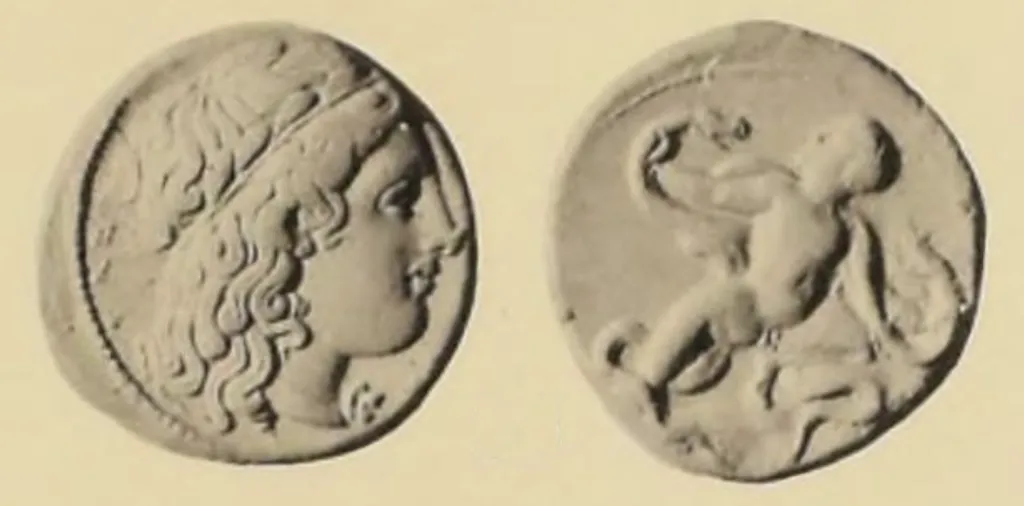
Source: Sotheby, Wilkinson & Hodge, The Important Collection of Coins and Medals of Wm. Rome, London, 24 February 1904. Internet Archive.
Kroton, Bruttium — AR stater. The obverse shows a laureate head of Apollo facing right. The reverse carries the young Herakles strangling two serpents. The inscription reads ΚΡΟΤΩΝΙΑΤΑΣ, meaning “of the Krotoniates.” No additional field symbol is clearly indicated on this type. This type is very rare. In modern terms, this indicates a civic silver issue of Kroton that links Apollo with the infant Herakles myth as an expression of local identity.
- Year — Minted circa 400–325 BC.
- Diameter — Known examples of this type measure about 20–21 mm.
- Weight — Standard weight of this type: approx. 7.5 g / 0.26 oz.
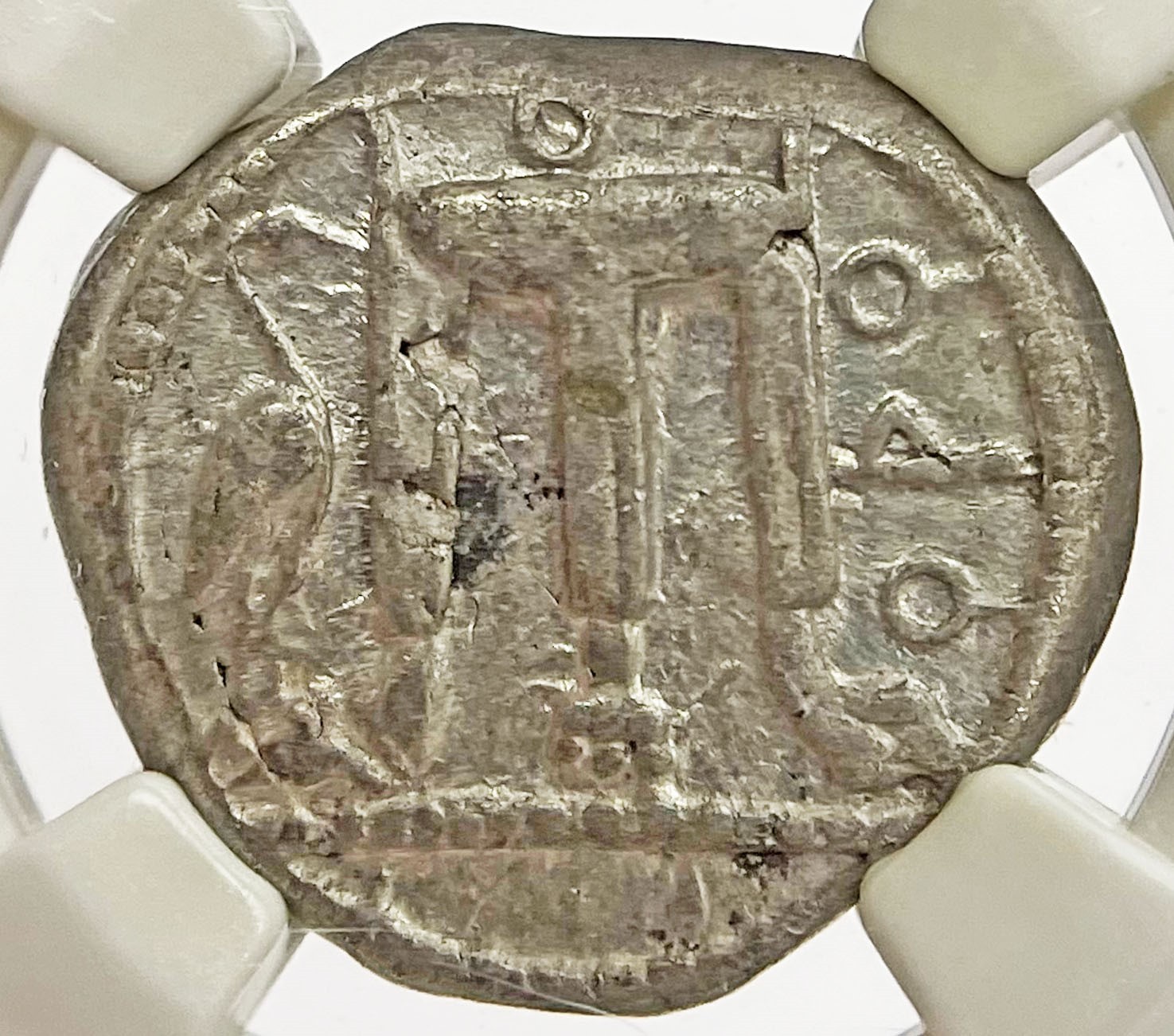
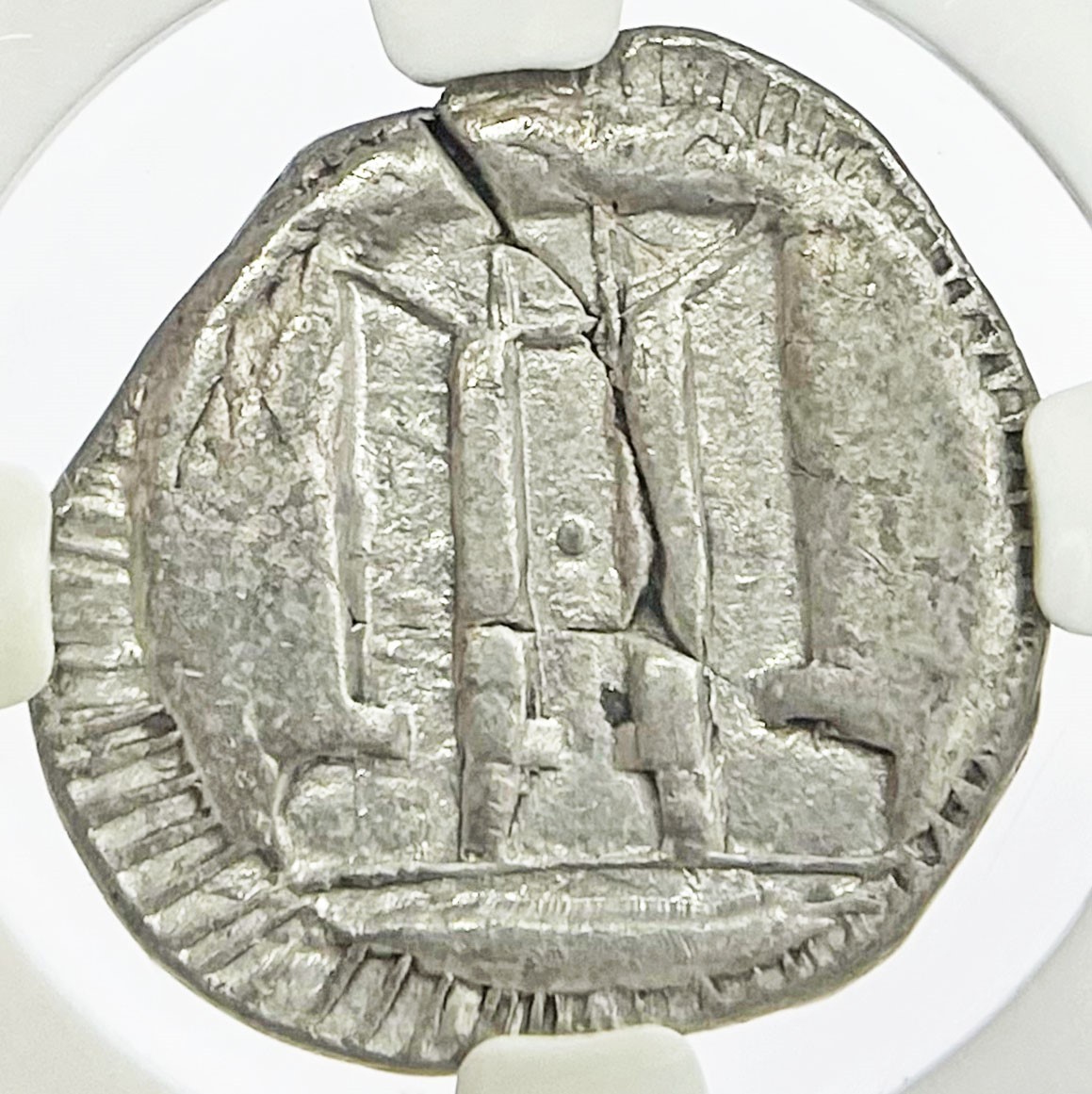

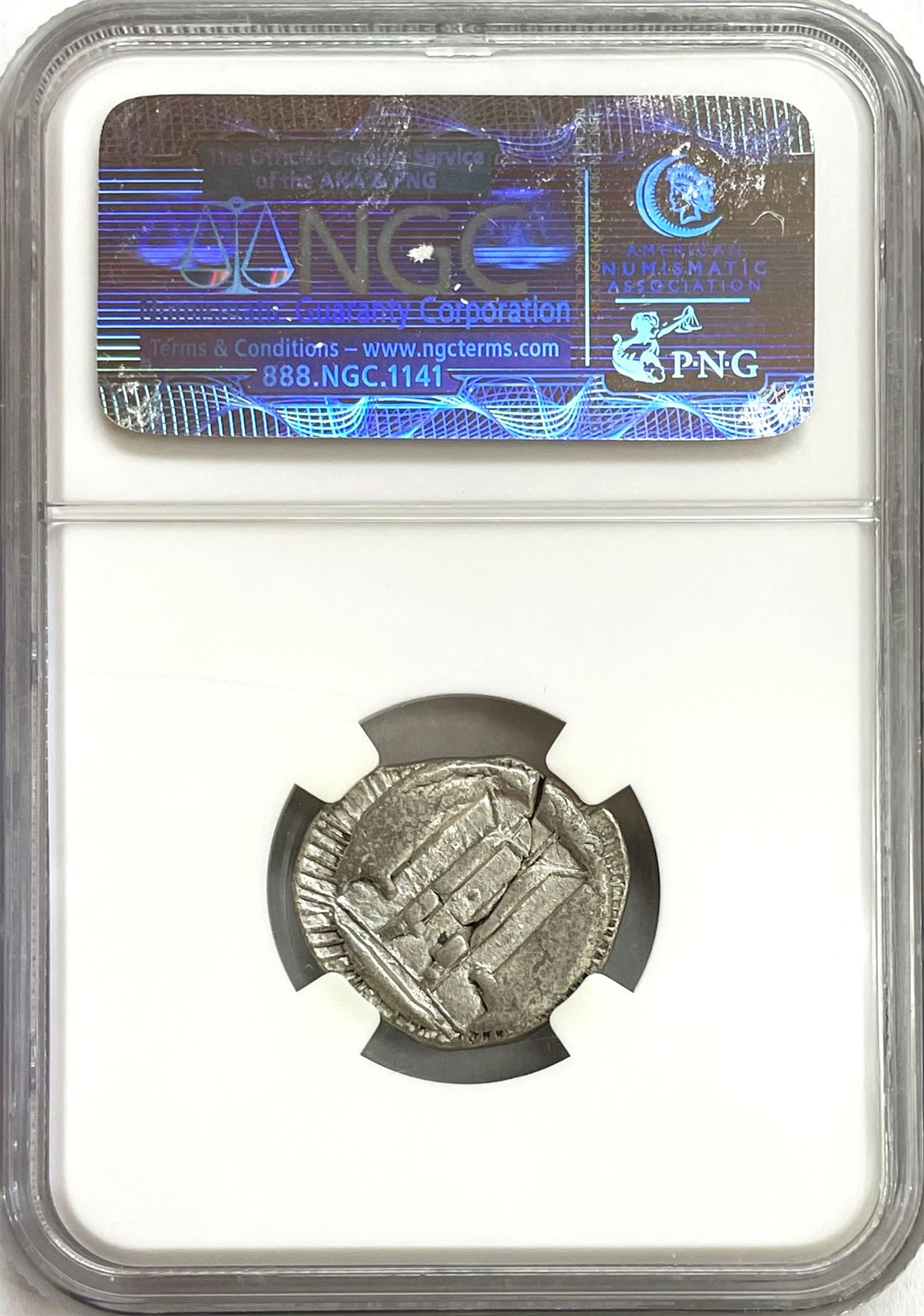
c. 480- 430 BC SILVER AR STATER BRUTTIUM CROTON TRIPOD COIN NGC CHOICE XF 4/5
(51532) 100.00% positive
Learn More Still curious? Click here to see AR Tetradrachm Coins (Part 3).

Larissa, Thessaly: Greek Silver AR Stater with Nymph Larissa and Prancing Horse
Source: Sotheby, Wilkinson & Hodge, The Important Collection of Coins and Medals of Wm. Rome, London, 24 February 1904. Internet Archive.
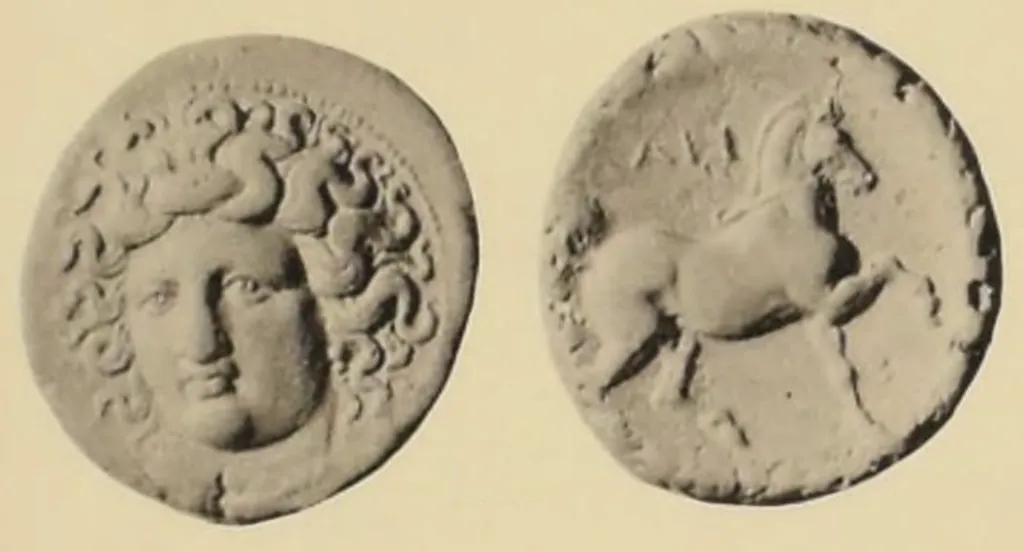
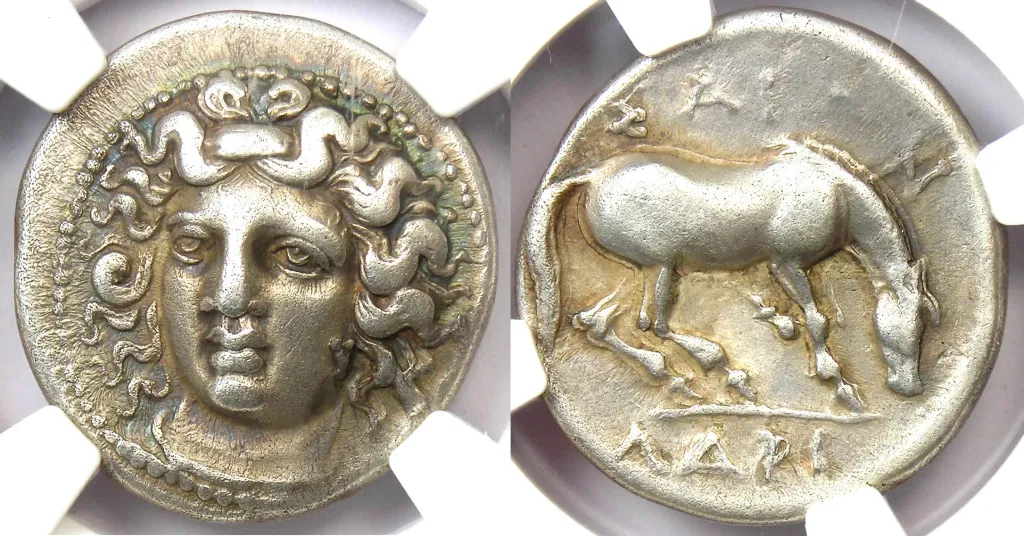
Larissa, Thessaly — AR stater. The obverse shows the head of the nymph Larissa facing, with flowing hair. The reverse carries a horse prancing to the right. The inscription reads ΛΑΡΙ, an abbreviated form of the city name. No additional field symbol is clearly noted for this type. This type is very fine and very rare. In modern terms, this indicates a scarce civic silver issue of Larissa that combines the local nymph with the horse imagery for which Thessalian coinage is especially well known.
Source: by Stable MARK - own work.
- Year — Minted circa 356–342 BC.
- Diameter — Known examples of this type measure about 23 mm.
- Weight — Standard weight of this type: approx. 12.27 g / 0.43 oz.
How much is it worth?
A similar example in excellent antique condition was sold on eBay (USA) for $992 in March 2026.


c.400-365 BC THESSALY, LARISSA AR Drachm NGC AU55 Nymph Horse Grazing
(11124) 100.00% positive
Learn More Still curious? Click here to see Silver AR Didrachm Coins.

Lokroi, Bruttium: Greek Silver AR Stater with Zeus and Eagle on Hare
Source: Sotheby, Wilkinson & Hodge, The Important Collection of Coins and Medals of Wm. Rome, London, 24 February 1904. Internet Archive.
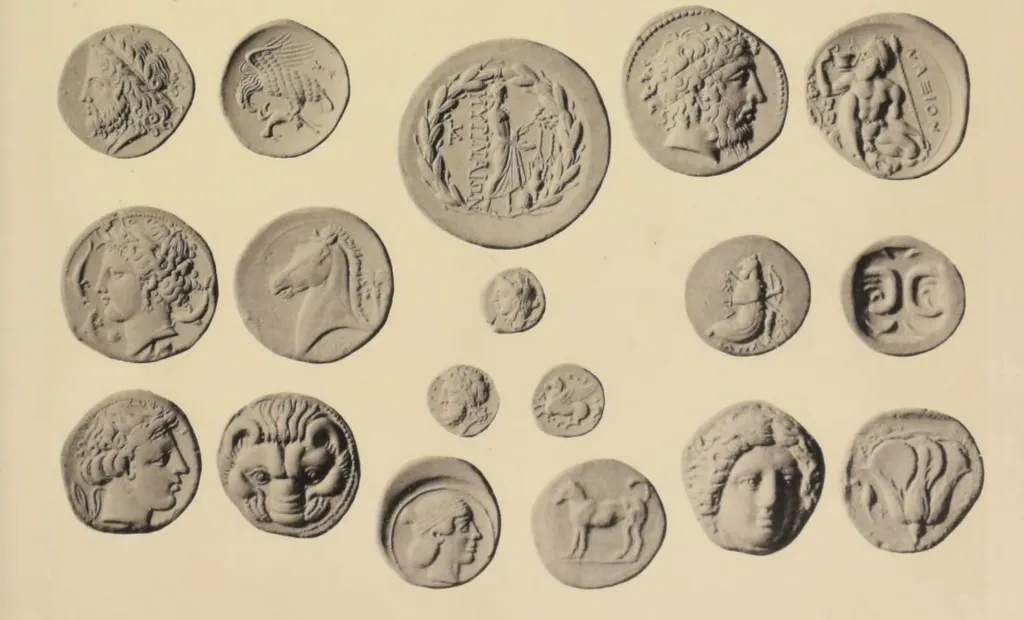
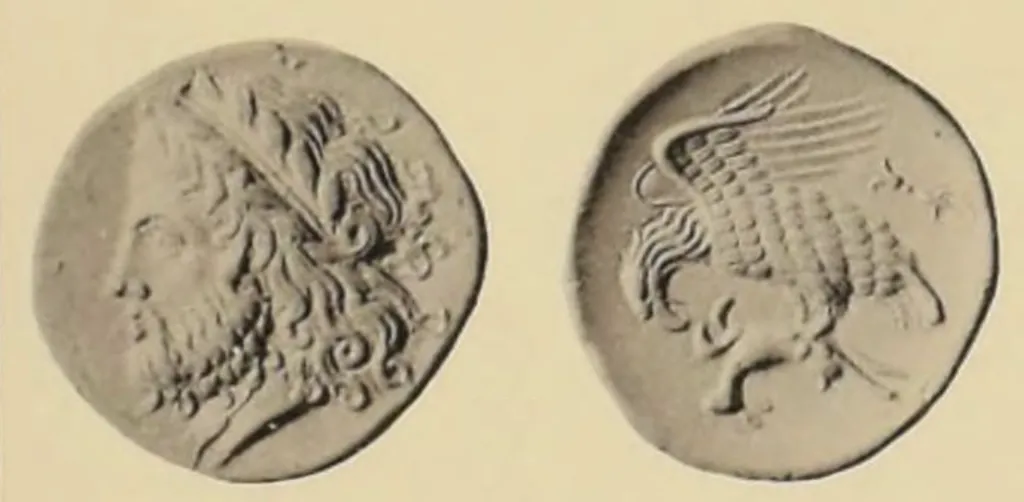
Lokroi, Bruttium — AR stater. The obverse shows a laureate head of Zeus facing left. The reverse carries an eagle standing left on a hare, with wings spread. No legend is noted for this type in the standard description. In the field appears a thunderbolt. This type is considered rare and is known in very fine style. In modern terms, this indicates a civic silver issue of Lokroi that uses the imagery of Zeus and his eagle to express divine authority and local identity.
- Year — Minted circa 400–350 BC.
- Diameter — Known examples of this type measure about 22 mm.
- Weight — Standard weight of this type: approx. 7.81 g / 0.28 oz.
Tarsos, Cilicia: Greek Silver AR Stater with Baaltars and Lion Attacking Bull
Source: Sotheby, Wilkinson & Hodge, The Important Collection of Coins and Medals of Wm. Rome, London, 24 February 1904. Internet Archive.
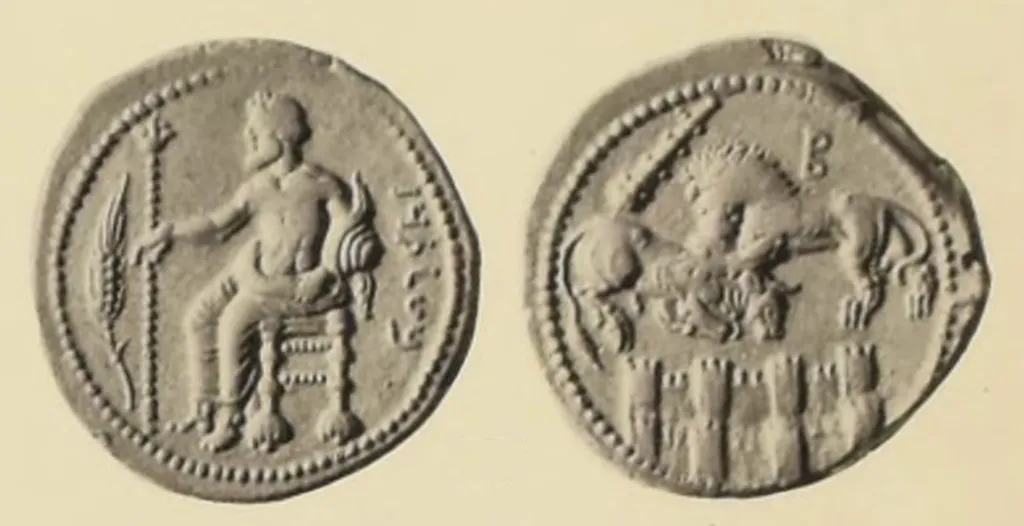
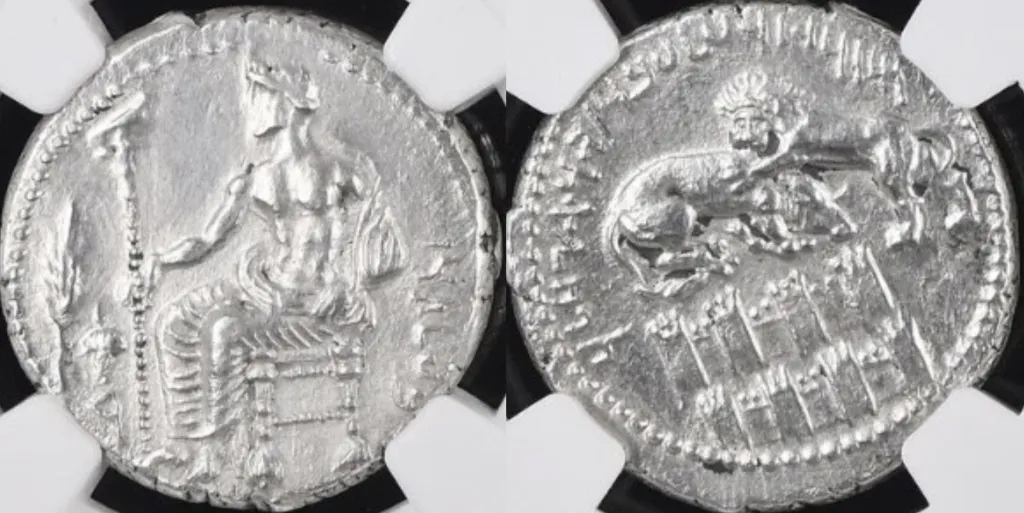
Tarsos, Cilicia — AR stater. The obverse shows Baaltars seated to left, holding a long lotus-tipped scepter. The reverse carries a lion attacking a bull above crenellated city walls. The inscription reads B’LTRZ, conventionally rendered as Baaltars in Aramaic/Phoenician script. In the field appears a grain ear on the obverse, while above the reverse type are a club and the letter B. This type is very fine in style and very rare. In modern terms, this indicates a satrapal silver issue: a coin struck under the authority of a regional governor rather than as an autonomous civic issue.
Source: by Stable MARK - own work.
- Year — Minted circa 333–323 BC.
- Diameter — Known examples of this type measure about 23 mm.
- Weight — Standard weight of this type: approx. 10.88 g / 0.38 oz.
How much is it worth?
A similar example in poor antique condition was sold on eBay (USA) for $210 in Apr. 2026.


c.361-328 BC Cilicia Tarsus AR Stater (10.90g) NGC Ancients AU
(14120) 99.90% positive
Learn More Still curious? Click here to see Ancient greek coins of Ptolemy I, Philip II, Hiero II, Alexander the Great.
Velia, Lucania: Greek Silver AR Stater with Athena and Lion Devouring Stag
Source: Sotheby, Wilkinson & Hodge, The Important Collection of Coins and Medals of Wm. Rome, London, 24 February 1904. Internet Archove.
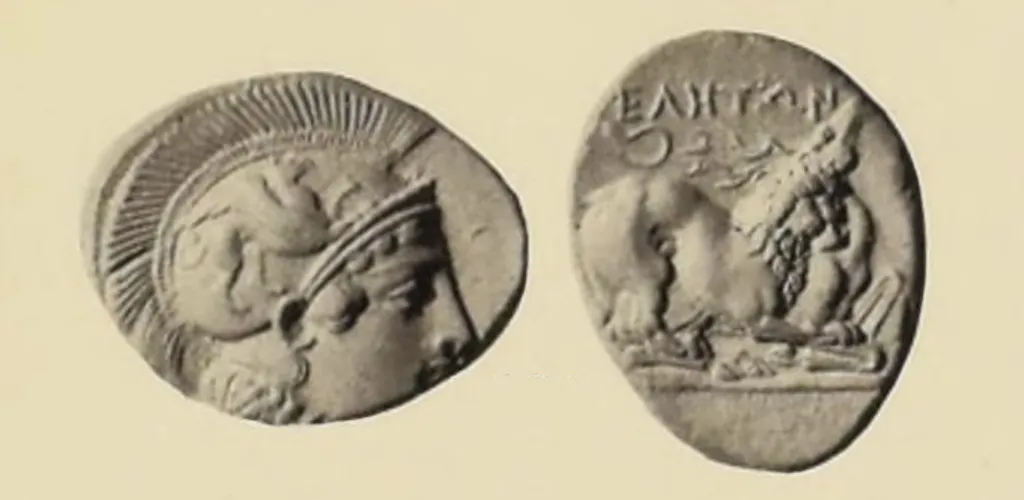
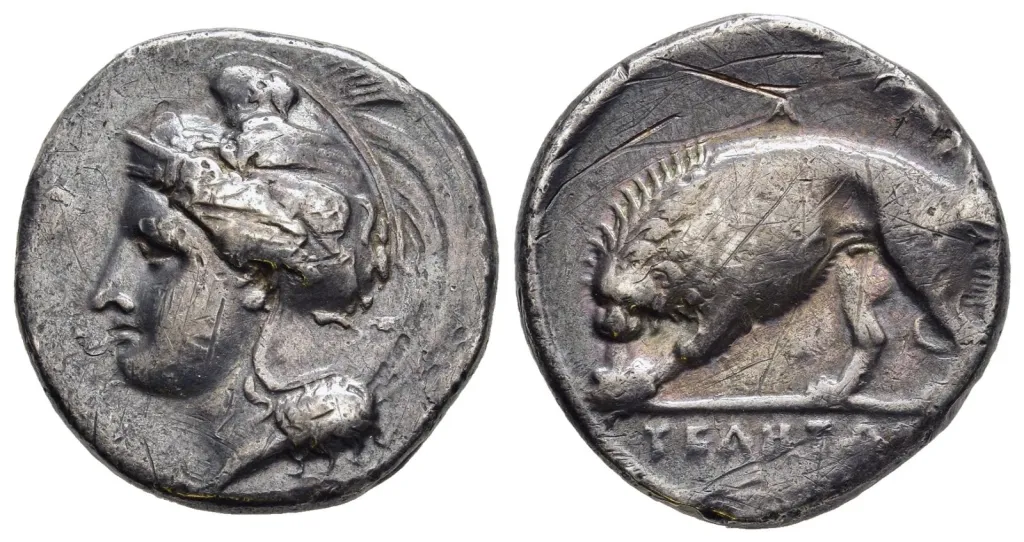
Velia, Lucania — AR stater. The obverse shows the head of Athena facing right, wearing a crested helmet ornamented with a griffin. The reverse carries a lion devouring a stag. The inscription reads ΥΕΛΗΤΩΝ, meaning “of the Velians.” No additional field symbol is clearly noted on this variety. This is a very rare variety and notable for its very fine style. In modern terms, this indicates a scarce and artistically accomplished civic silver issue of Velia.
Source: by Stable MARK - own work.
- Year — Generally dated to the late 4th century BC.
- Diameter — Known examples of this type usually measure about 19–21 mm.
- Weight — Standard weight of this type: approx. 7.2–7.6 g / 0.25–0.27 oz.
How much is it worth?
A similar example in good antique condition was sold on eBay (USA) for $459 in Feb. 2026.
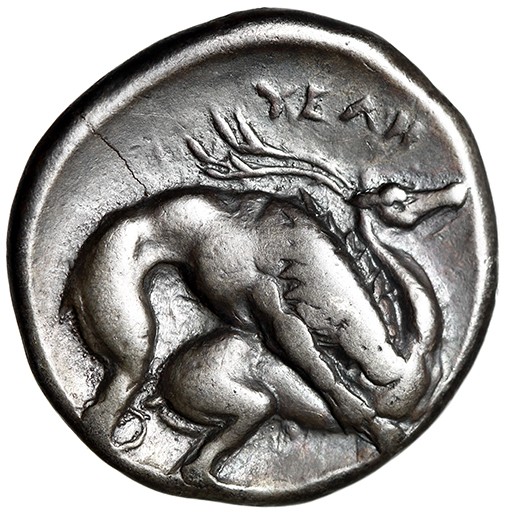



Lucania, Velia AR Nomos "Athena & Lion Preying on Stag" Very Fine
(13371) 100.00% positive
Share this article