Ancient Greek Silver AR Tetradrachm Coins Part 2
From Rhodian roses to Syracusan racing quadrigas, this second part explores how Greek silver AR tetradrachms turned civic identity into miniature works of art.
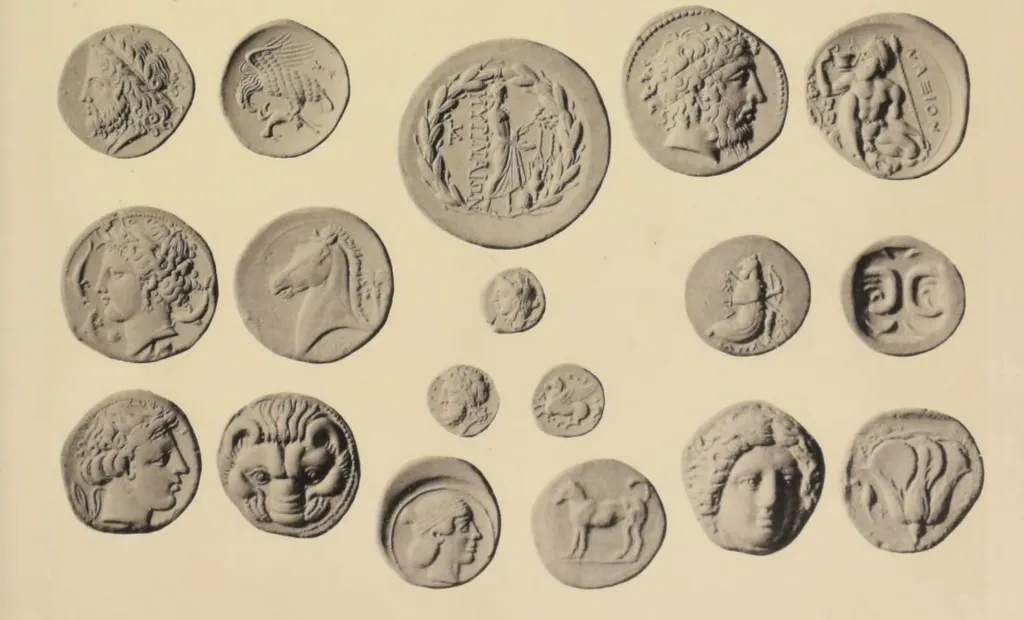
Source: Sotheby, Wilkinson & Hodge, The Important Collection of Coins and Medals of Wm. Rome, London, 24 February 1904. Internet Archive.
In this article, readers will find a guided survey of ancient Greek silver AR tetradrachms from important mints such as Panormos, Rhegion, Rhodos, Samos, and Syrakousai, with clear explanations of portraits, reverse types, inscriptions, symbols, dating, and the historical meaning behind each coin.
Table of Contents
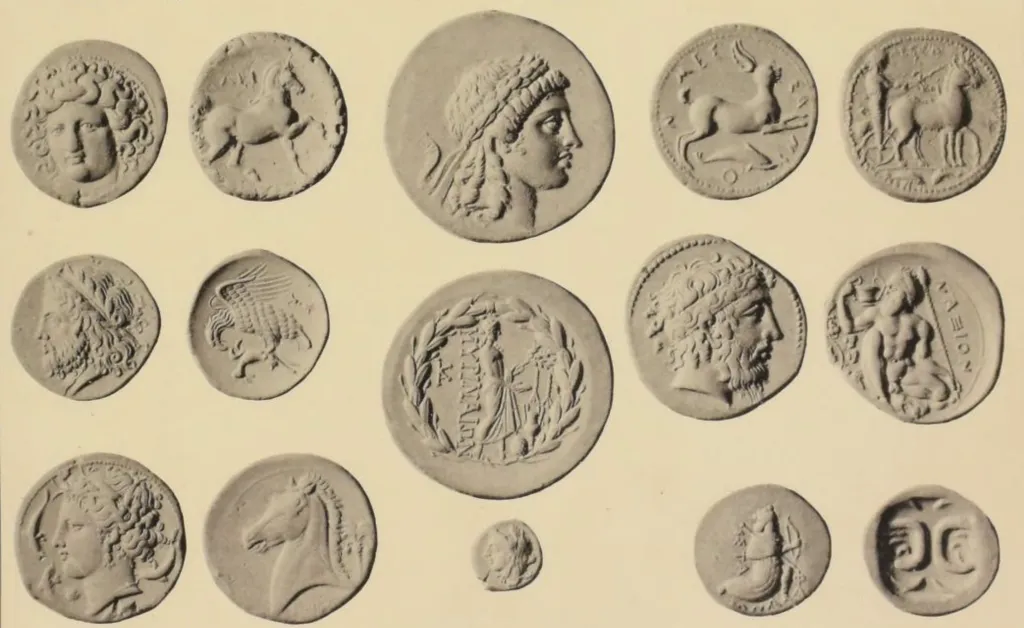
Panormos, Sicily: Silver AR Tetradrachm with Persephone and Horse’s HeadRhegion, Bruttium: Greek Silver AR Tetradrachm with Apollo and Facing Lion’s HeadRhodos, Carian Islands: Greek Silver AR Tetradrachm with Facing Helios and RoseSamos, Ionian Islands: Greek Silver AR Tetradrachm with Facing Lion Scalp and Forepart of BullSyrakousai, Sicily: Greek Silver AR Tetradrachm with Female Head in Sakkos and QuadrigaSyrakousai, Sicily: Greek Silver Tetradrachm with Arethusa and Fast QuadrigaSyrakousai, Sicily: Greek Silver Dekadrachm with Persephone and QuadrigaPanormos, Sicily: Silver AR Tetradrachm with Persephone and Horse’s Head
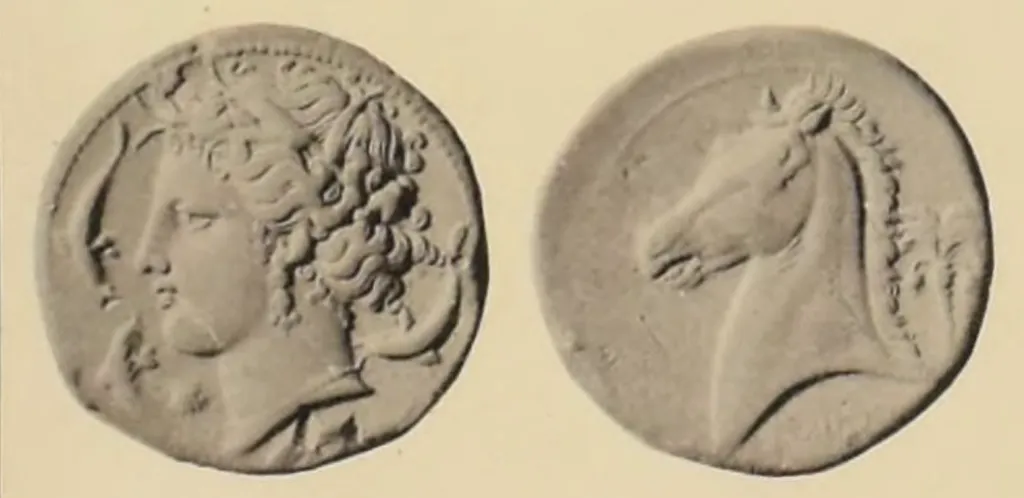
Source: Sotheby, Wilkinson & Hodge, The Important Collection of Coins and Medals of Wm. Rome, London, 24 February 1904. Internet Archive.
Panormos, Sicily — AR Siculo-Punic tetradrachm. The obverse shows the head of Persephone to left, wreathed with grain leaves, with a shell beneath the chin and dolphins around the head. The reverse carries a horse’s head to left. The inscription reads as a Punic legend below. In the field appears a palm behind the horse’s head. In modern terms, this indicates a carefully engraved silver tetradrachm that combines Greek visual language with Punic identity in Sicily.
- Year — Minted circa 320–300 BC.
- Diameter — Known examples of this type measure about 26.25–27 mm.
- Weight — Known examples of this type weigh about 16.5–17.0 g / 0.58–0.60 oz.
How much is it worth?
A similar example, in good antique condition, sold on eBay (USA) for $2,721.75 in Feb 2026.


Sicily Panormus Silver Tetradrachm (317-289 BC) Ch XF NGC (3/3)
(628125) 99.40% positive
Learn More Still curious? Click here to see more Ancient Greek Silver AR Tetradrachm Coins.
Rhegion, Bruttium: Greek Silver AR Tetradrachm with Apollo and Facing Lion’s Head
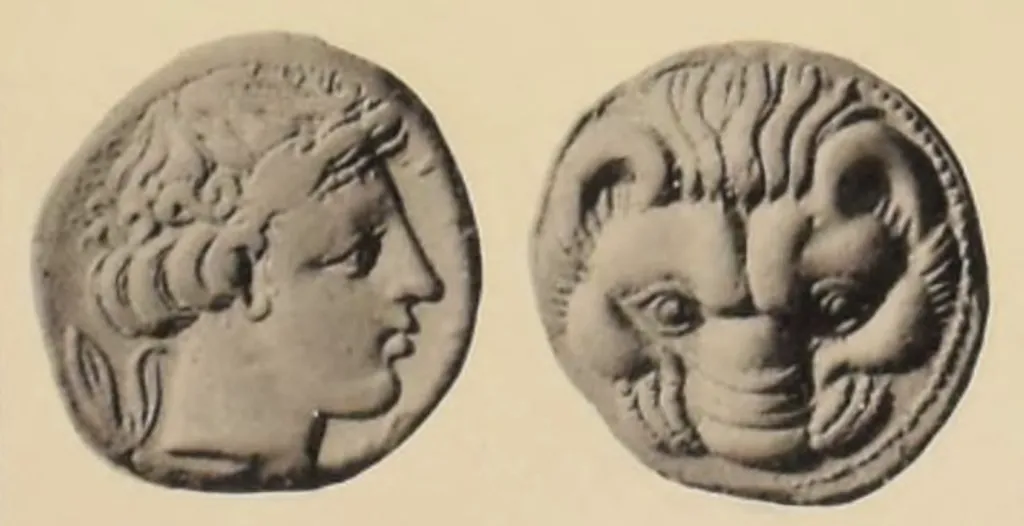
Source: Sotheby, Wilkinson & Hodge, The Important Collection of Coins and Medals of Wm. Rome, London, 24 February 1904. Internet Archive.
Rhegion, Bruttium — AR tetradrachm. The obverse shows a laureate head of Apollo to right. The reverse carries a facing lion’s head. The inscription reads ΡΗΓΙΝΟΝ, though only traces survive on this specimen. In the field appears an olive sprig behind Apollo’s head. In modern terms, this indicates a scarce and finely engraved silver issue from the late Classical coinage of Rhegion.
- Year — Minted circa 415/410–387 BC.
- Diameter — Known examples of this type measure 22–25 mm.
- Weight — Standard weight of this type: approx. 17.12 g / 0.60 oz.


435-425 BC Bruttium Rhegion AR Tetradrachm Lion Lokastos Seated 16.44g Ancient
(6872) 99.90% positive
Learn More Still curious? Click here to see Ancient Greek Silver AR Stater Coins.
Rhodos, Carian Islands: Greek Silver AR Tetradrachm with Facing Helios and Rose
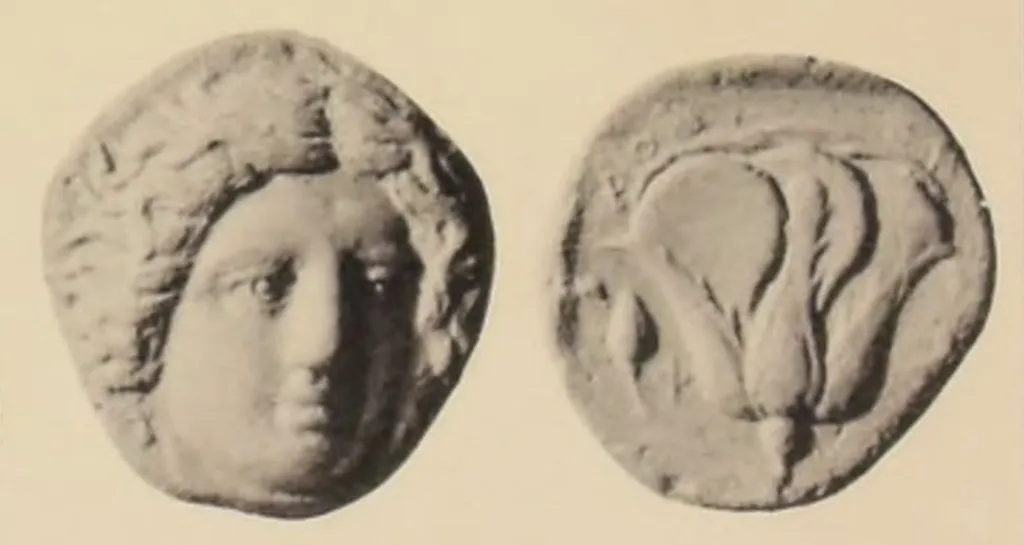
Source: Sotheby, Wilkinson & Hodge, The Important Collection of Coins and Medals of Wm. Rome, London, 24 February 1904. Internet Archive.
Rhodos, Carian Islands — AR tetradrachm. The obverse shows a facing head now generally identified as Helios. The reverse carries a rose with bud. The inscription reads ΡΟΔ..., the ethnic of Rhodes. In the field appears the letter Φ. The coin is struck in unusually bold relief. In modern terms, this indicates a silver issue with strong, sculptural modeling, meant to give the types exceptional visual force.
- Year — Minted circa 404–385 BC.
- Diameter — Known examples of closely related early issues measure about 25–25.5 mm.
- Weight — Known examples of closely related early issues weigh about 15.1–15.3 g / 0.53–0.54 oz.
How much is it worth?
A similar example, in satisfying antique condition, sold on eBay (USA) for $358.20 in Feb 2026.


CARIA, Rhodes Tetradrachm 316 - 305 BC. Helios Rose Ancient greek coin NGC CH VF
(1816) 100.00% positive
Learn More Still curious? Click here to see more Silver AR Tetradrachm Coins (Part 3).

Samos, Ionian Islands: Greek Silver AR Tetradrachm with Facing Lion Scalp and Forepart of Bull
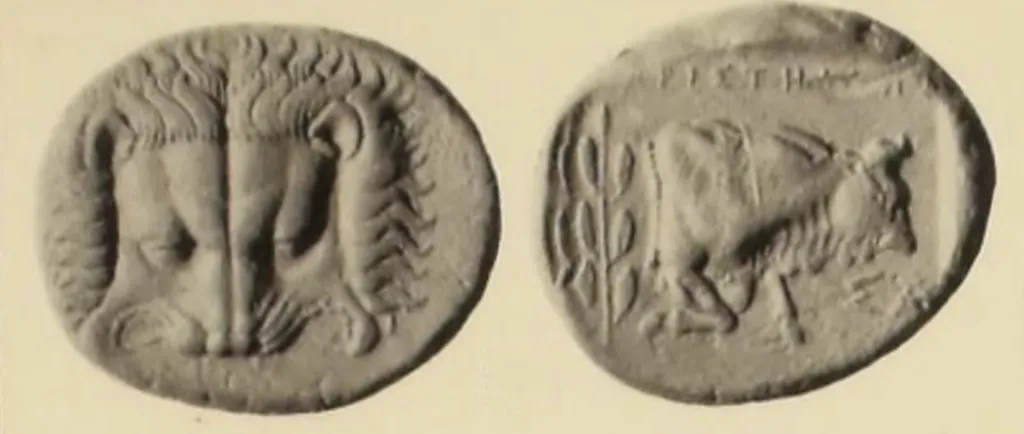
Source: Sotheby, Wilkinson & Hodge, The Important Collection of Coins and Medals of Wm. Rome, London, 24 February 1904. Internet Archive.
Samos, Ionian Islands — AR tetradrachm. The obverse shows a facing lion scalp, a striking badge type used on Samian silver. The reverse carries the forepart of a bull to right. The inscription reads ΣA and ΑΡΙΣΤΗ..., preserving the city ethnic and the beginning of a magistrate’s name. In the field appears a laurel branch at left. In modern terms, this indicates a late Classical Samian civic silver issue that combines a bold emblematic obverse with a reverse naming the issuing authority in abbreviated form.
- Year — Minted circa 405–366 BC.
- Diameter — Known examples of this type measure about 23–24.5 mm.
- Weight — Standard weight of this type: approx. 15.2 g / 0.54 oz.
How much is it worth?
A similar example, in excellent antique condition, sold on eBay (USA) for $5,001.75 in March 2026.

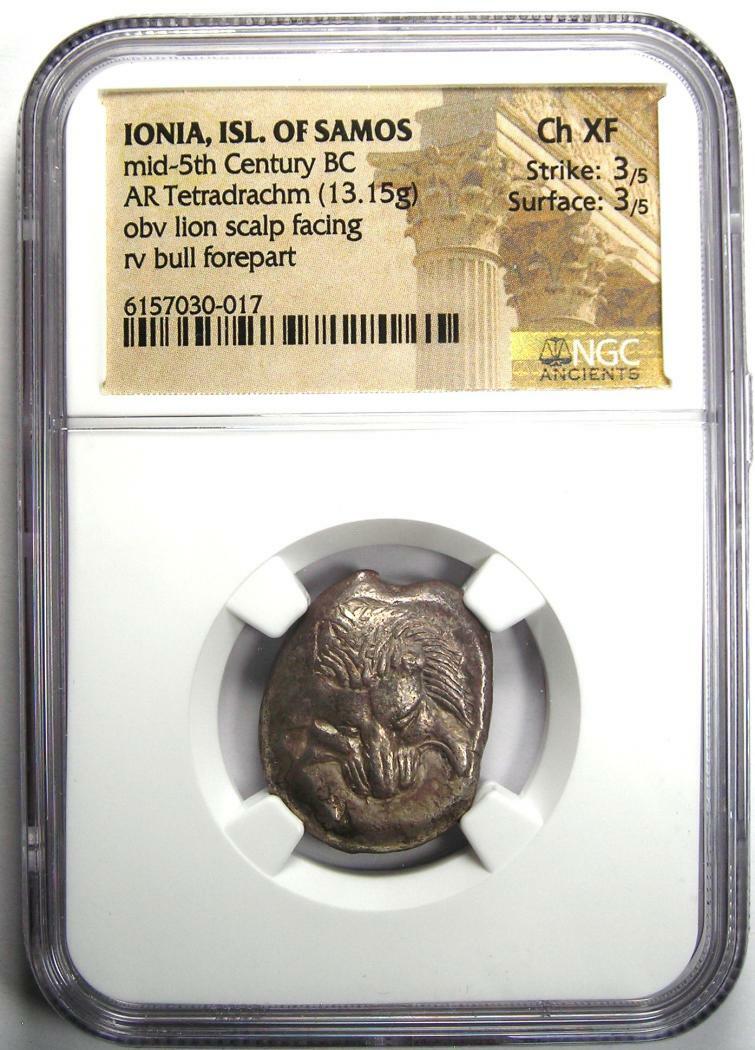
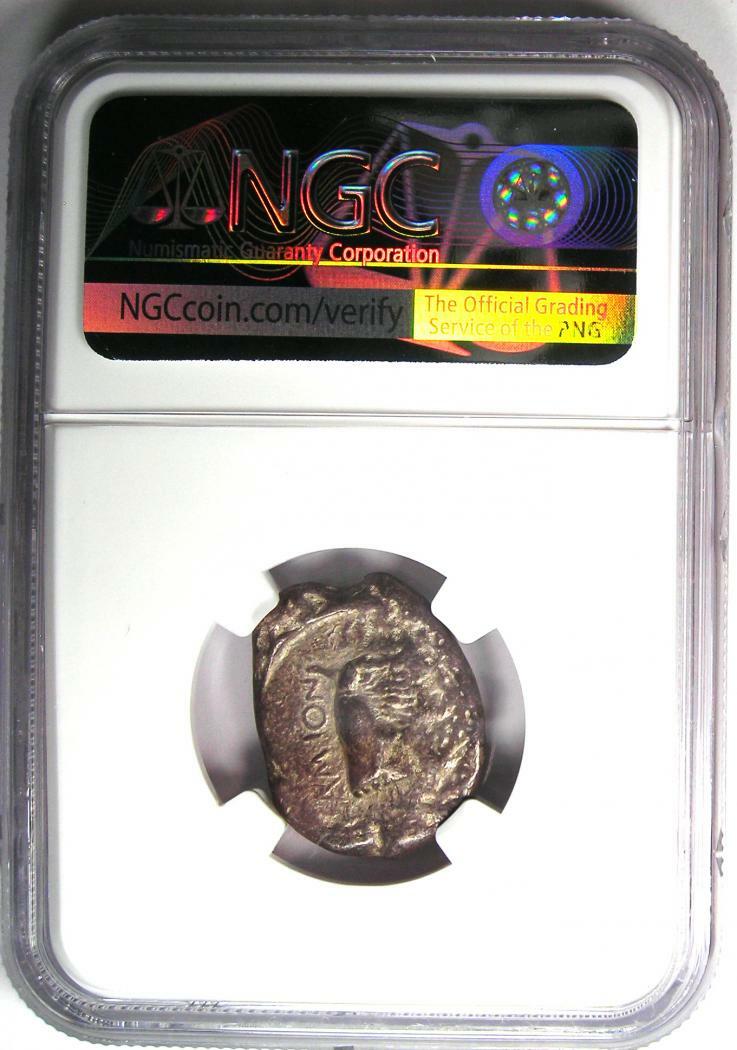


Ionia Samos Lion AR Tetradrachm Silver Coin 400 BC - Certified NGC Choice XF
(33698) 100.00% positive
Learn More Still curious? Click here to see Silver AR Didrachm Coins.

Syrakousai, Sicily: Greek Silver AR Tetradrachm with Female Head in Sakkos and Quadriga
Source: Sotheby, Wilkinson & Hodge, The Important Collection of Coins and Medals of Wm. Rome, London, 24 February 1904. Internet Archive.
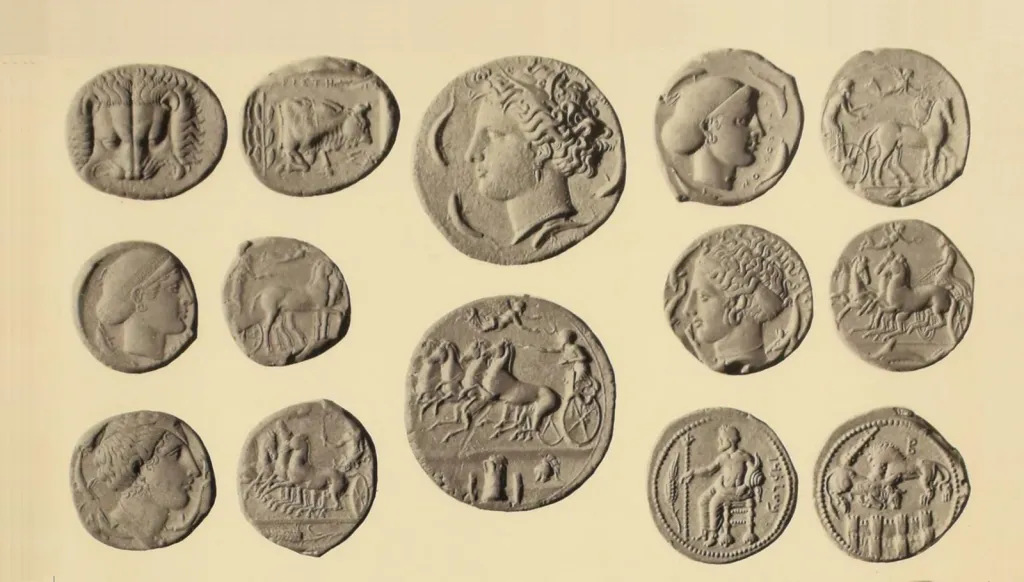
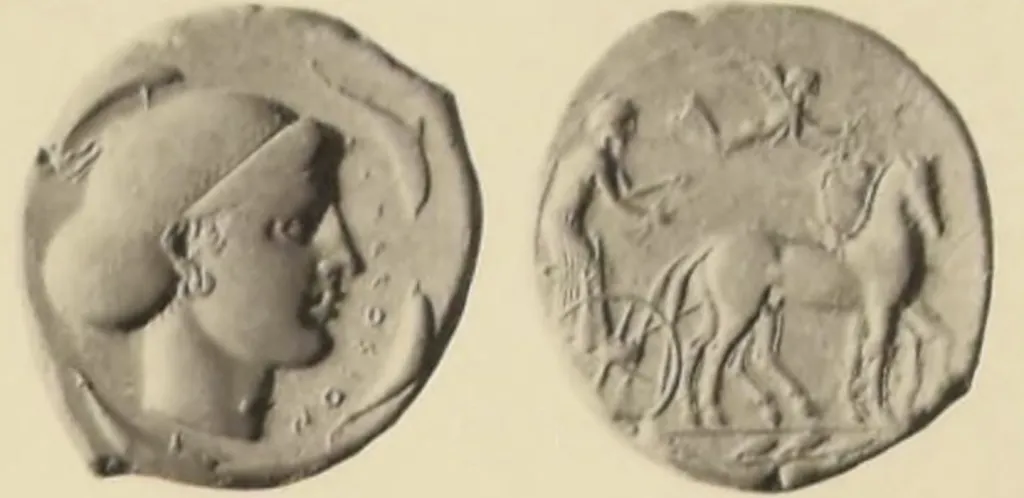
Syrakousai, Sicily — AR tetradrachm. The obverse shows a female head to right, generally identified as Arethusa, with the hair enclosed in a sakkos. The reverse carries a quadriga to right. The inscription reads ΣΥΡΑΚΟΣΙΩΝ, the ethnic of Syracuse. In the field appears Nike above the horses, crowning the team. The style belongs to the transition from late Archaic engraving toward a calmer and more natural Classical manner. In modern terms, this indicates an early Syracusan silver issue in which the old prestige type of the racing chariot is paired with a more refined civic portrait.
- Year — Minted in the early 5th century BC, circa 490–475 BC.
- Diameter — Known examples of closely related early issues measure about 23–25 mm.
- Weight — Standard weight of this class: approx. 17.2–17.4 g / 0.61 oz.
How much is it worth?
A similar example, in excellent antique condition, sold on eBay (USA) for $1,990.25 in April 2026.


430-420 BC Sicily, Syracuse AR Tetradrachm NGC Ancients Ch F
(8888) 99.40% positive

Syrakousai, Sicily: Greek Silver Tetradrachm with Arethusa and Fast Quadriga
Source: Sotheby, Wilkinson & Hodge, The Important Collection of Coins and Medals of Wm. Rome, London, 24 February 1904. Internet Archive.
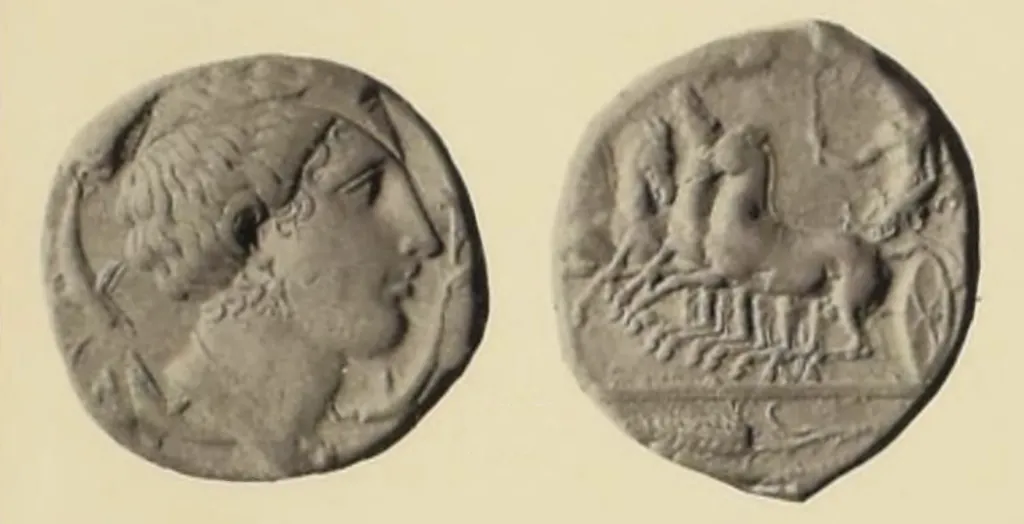
Syrakousai, Sicily — AR tetradrachm. The obverse shows a female head to right, generally identified as Arethusa, with the hair drawn up and knotted at the crown. The reverse carries a fast quadriga to left. The inscription reads ΣΥΡ..., an abbreviated form of the city ethnic. In the field appears Nike above crowning the charioteer, while a cornstalk is placed in the exergue. This issue belongs to the Dionysian period and is often associated with the engraver Eukleidas. In modern terms, this indicates a prestigious Syracusan silver coin of the late 5th century BC, combining civic identity with highly refined die engraving.
- Year — Minted circa 405–400 BC.
- Diameter — Known examples of this type measure about 25 mm.
- Weight — Standard weight of this type: approx. 17.0–17.31 g / 0.60–0.61 oz.
Syrakousai, Sicily: Greek Silver Dekadrachm with Persephone and Quadriga
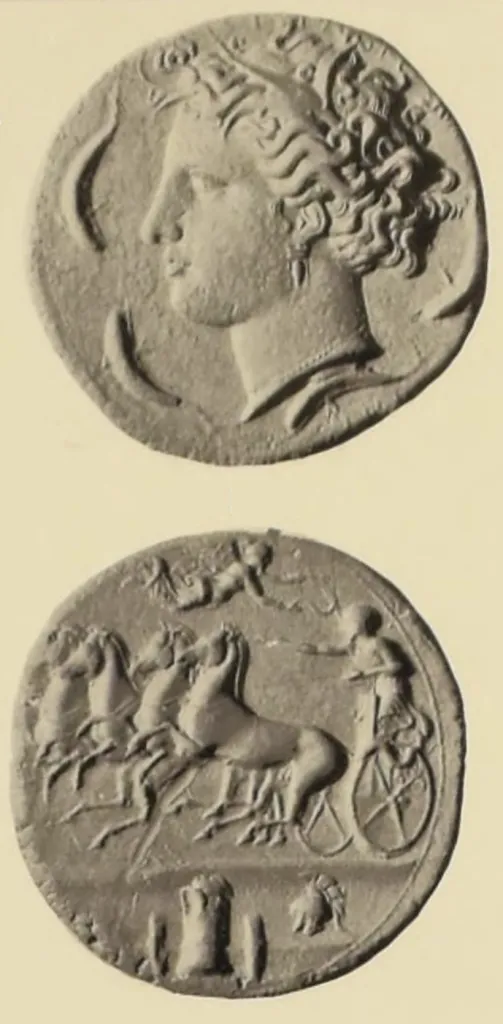
Source: Sotheby, Wilkinson & Hodge, The Important Collection of Coins and Medals of Wm. Rome, London, 24 February 1904. Internet Archive.
Syrakousai, Sicily — AR dekadrachm. The obverse shows a female head to left, here identified as Persephone, wearing a wreath of grain leaves and framed by four dolphins. The reverse carries a quadriga to left. The inscription preserves traces of ΣΥΡΑΚΟΣΙΩΝ above and ΕΥΑΙΝΕ below. In the field appears Nike crowning the charioteer, while prize armor is set in the exergue. This issue belongs to the celebrated Syracusan dekadrachm series associated with Euainetos. In modern terms, this indicates a large, prestigious silver coin struck to display civic wealth, technical skill, and outstanding die engraving.
- Year — Minted circa 405–390 BC.
- Diameter — Known examples of this type are about 35 mm in diameter, with broad flans reaching roughly 42 mm at the widest point.
- Weight — Standard weight of this type: approx. 43.2–43.3 g / 1.52 oz.


SICILY. Syracuse. Agathocles (317-289 BC). AR tetradrachm 17.25 G
(614) 100.00% positive
Share this article